1st
Grid-forming, grid-connected BESS project in Malaysia
As Malaysia's energy system integrates more renewable energy, the national grid must be able to respond quickly to changes in electricity generation and demand. Solar power, for example, varies according to weather conditions and the time of day. This creates a growing need for flexible technologies that can store electricity when it is available and release it when the grid needs additional support.
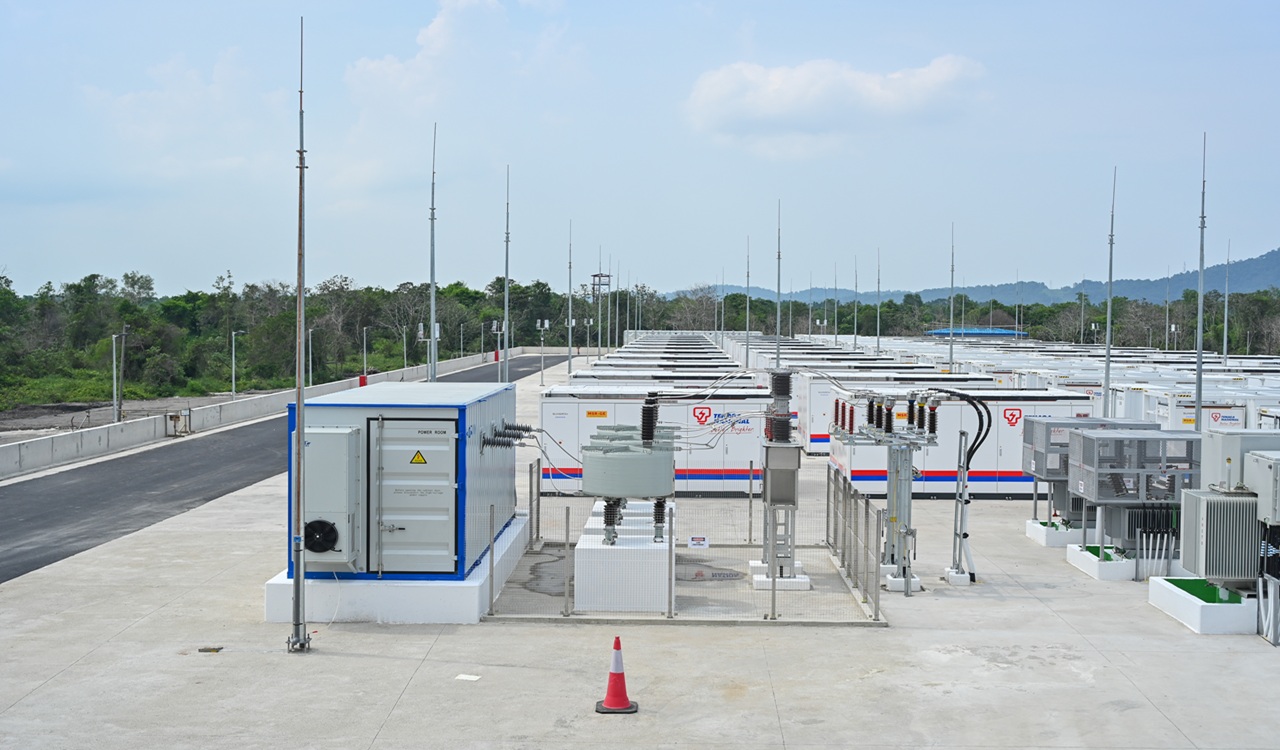
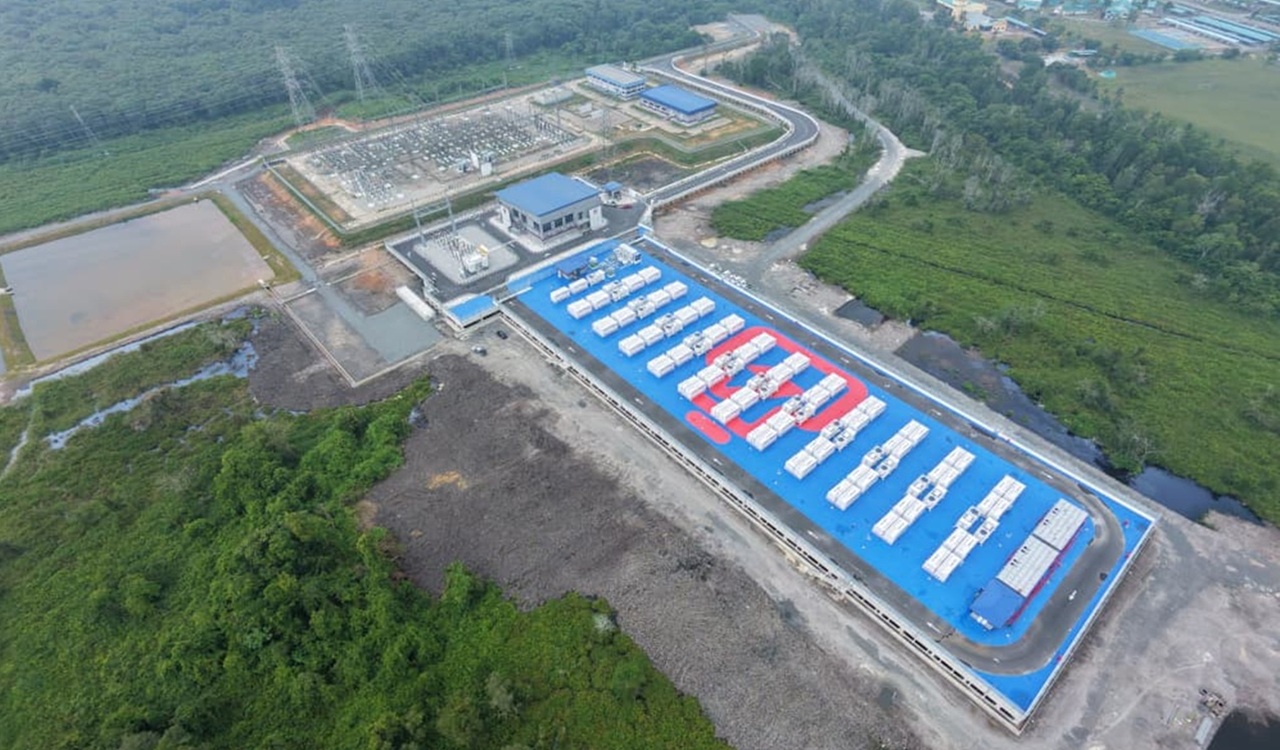
In Dungun, Terengganu, TNB’s Battery Energy Storage System (BESS) Santong is introducing this flexibility at scale. Located within the existing 132/33 kV Santong Main Intake Substation (PMU), the facility has a power capacity of 100 megawatts (MW) and an energy storage capacity of 400 megawatt-hours (MWh), enabling it to deliver 100 MW of power for up to four hours.
BESS Santong began operations on 16 April 2026 and was launched on 18 May 2026 as Malaysia’s first grid-forming, grid-connected BESS project. Equipped with grid-forming capability, the system represents an important step in strengthening grid resilience while supporting the country’s wider energy transition.
BESS Santong acts as a large-scale ‘smart energy bank’, absorbing excess electricity and making it available when the grid needs additional support.
The Grid System Operator (GSO) coordinates the charging and discharging processes according to prevailing grid conditions, storing electricity when generation is high and releasing it rapidly during periods of peak demand or system disturbances. This rapid-response capability becomes increasingly important as more variable renewable energy is connected to the grid, supporting the stability and efficient operation of the wider network.
High generation
BESS stores electricity
FEMS monitors system condition
NLDC coordinates dispatch
BESS releases electricity when needed
Grid stability and reliability support
This flexibility supports Malaysia’s National Energy Transition Roadmap (NETR) by preparing the grid to accommodate a larger proportion of renewable energy. Malaysia aims to achieve 70% renewable energy installed capacity by 2050, making grid flexibility and large-scale energy storage increasingly important.
By enabling the grid to accommodate a greater share of variable renewable energy while maintaining stability, BESS Santong strengthens the infrastructure needed for a more flexible and reliable electricity system.
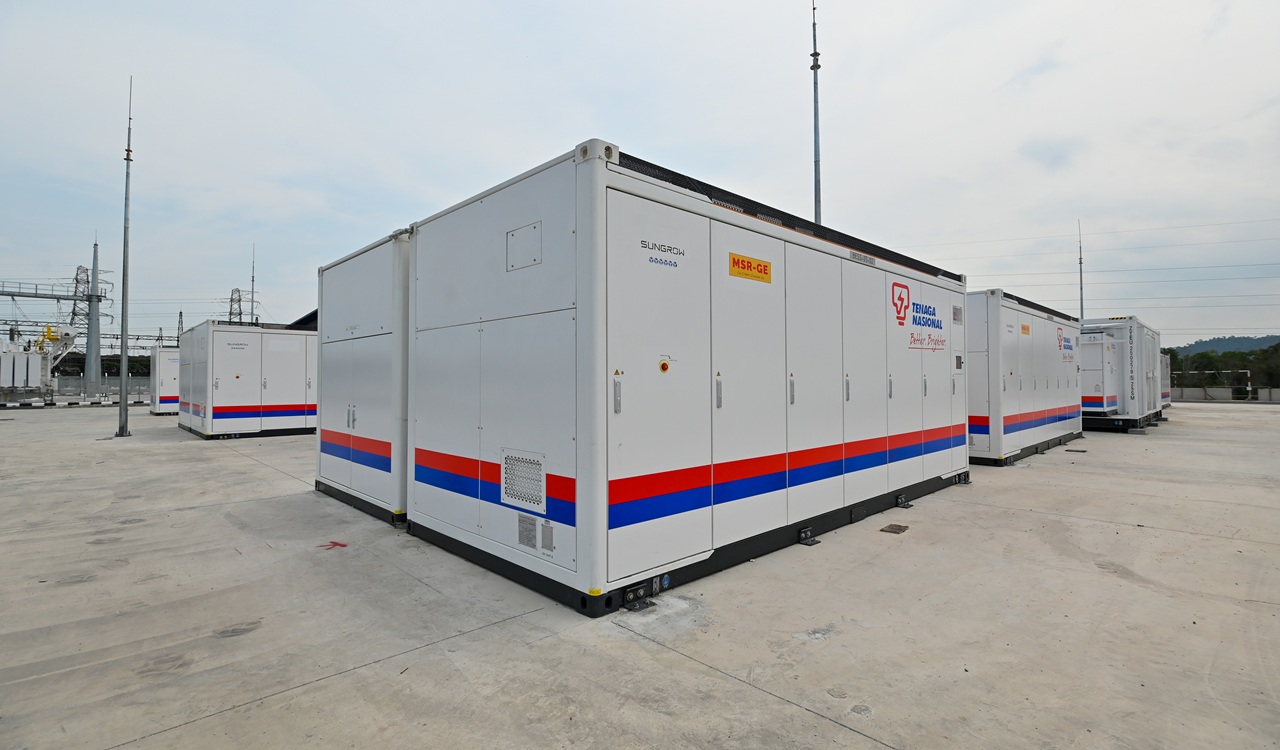
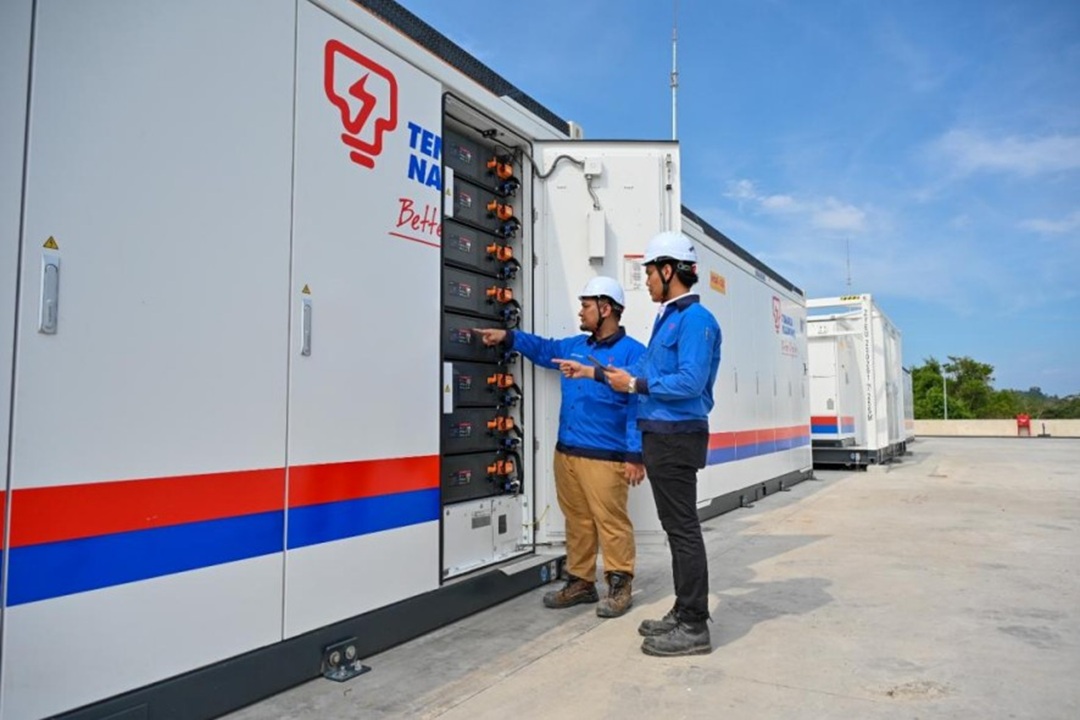
BESS Santong uses lithium iron phosphate battery cells supported by integrated liquid-cooling technology. The system is designed for an operational lifespan of up to 20 years, with a minimum required round-trip efficiency of 88%.
Real-time monitoring provides visibility of performance indicators such as battery state of health, rack temperature and system efficiency. Monitoring can be conducted at the individual battery-cell level, allowing abnormal operating conditions to be detected and addressed early.
Safety measures have been incorporated through thermal-management and fire-protection systems, supported by established technical standards for stationary energy-storage facilities. Together with real-time monitoring, these controls help manage battery temperature, operating conditions and potential safety risks throughout the facility’s lifecycle.
The facility was also designed around challenging local conditions, including swampy ground, high flood levels and heavy rainfall during the East Coast monsoon. An elevated reinforced-concrete platform was constructed to protect the installation, while careful workforce planning and close coordination enabled the project to be completed in 309 days, ahead of its 365-day contractual period.
Delivery involved close engagement with regulators, local authorities, emergency-response agencies, technology providers and internal TNB teams, while helping to build specialised capabilities in utility-scale energy storage.
By strengthening electricity-system stability, BESS Santong provides benefits beyond the physical grid infrastructure. Its capacity is equivalent to supporting the electricity requirements of approximately 40,000 households, depending on prevailing consumption patterns, particularly across the East Coast.
A more stable and resilient electricity system can reduce the impact of disruptions and support continuity for communities, businesses and industries that depend on reliable electricity.
BESS Santong: The Snapshot
BESS Santong’s pioneering role was formally recognised by the Malaysia Book of Records as Malaysia’s ‘First Grid-Forming Grid Connected BESS Project.’
What sets grid-forming BESS apart is its ability to create its own voltage reference, rather than relying entirely on an existing grid signal. This enables capabilities such as black start, allowing the system to help restore power to parts of the grid following a blackout. It also provides a stronger foundation for integrating larger amounts of renewable energy while maintaining grid stability. These capabilities make BESS Santong an important step in preparing Malaysia’s electricity system for a more flexible, resilient and renewable-ready future.
The recognition therefore goes beyond marking a technological first. It demonstrates how investments in innovation, technical capabilities and grid infrastructure are translating Malaysia’s energy-transition ambitions into practical implementation.
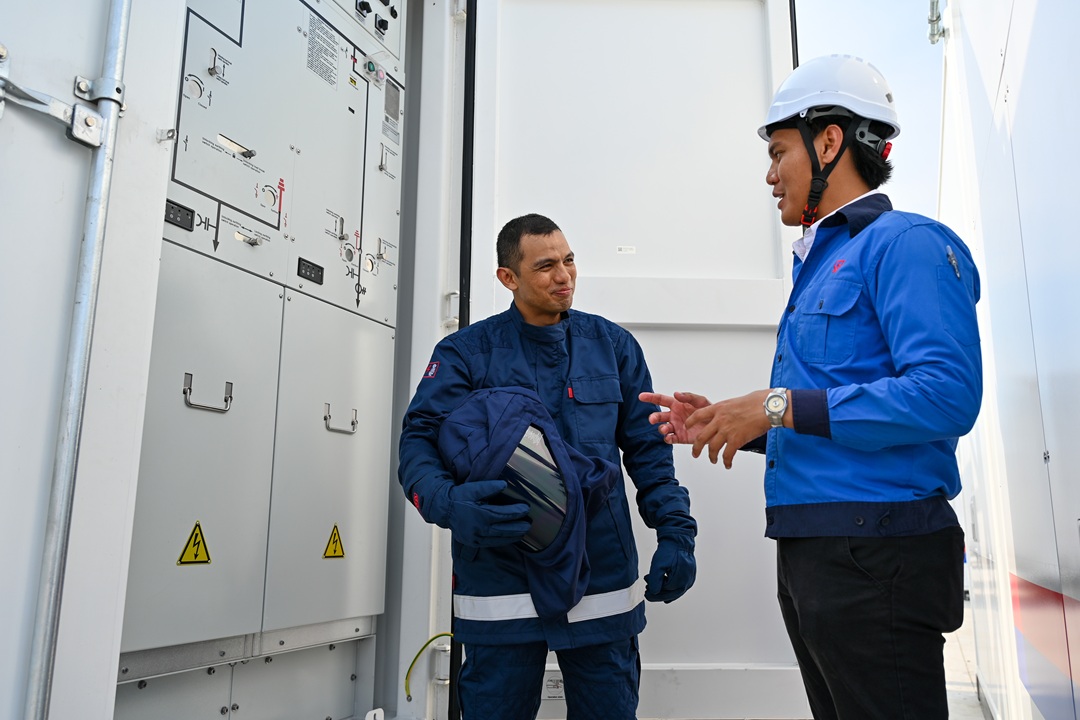
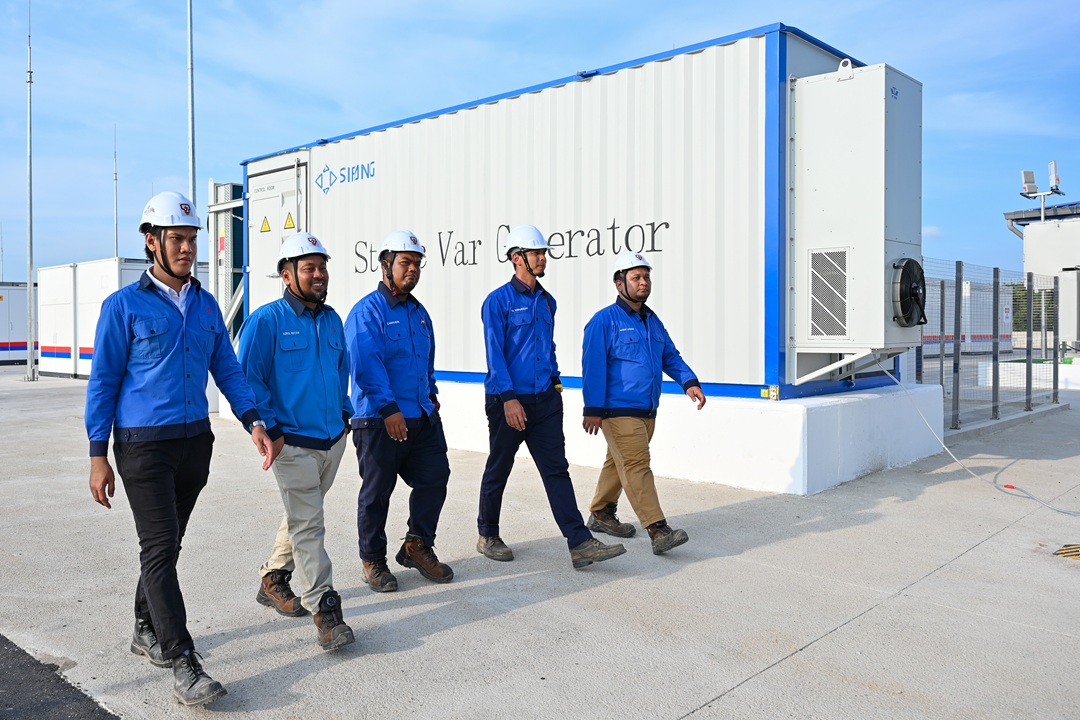
As TNB’s first large-scale grid-connected BESS, Santong is building practical experience in battery operations, grid-forming technology, digital monitoring, safety management and renewable energy integration. These lessons learned can inform future energy-storage developments and the continued modernisation of Malaysia’s electricity infrastructure.
As renewable energy expands, solutions such as BESS Santong will play an increasingly important role in keeping the grid stable, responsive and ready for Malaysia’s future energy needs.