The responsibilities of an energy utility extend beyond providing reliable electricity. Its activities can affect employees, supply chain workers, customers and the communities surrounding its operations and infrastructure.
For Tenaga Nasional Berhad (TNB), managing these relationships responsibly means considering how its business activities may affect people, their safety, livelihoods and access to essential services.
TNB began formalising these practices through its Labour Rights Policy Statement established in 2024, which set out seven key areas covering employees and vendors. These include safety and health, protection against forced and child labour, wages and benefits, access to training, freedom of association, diversity and non-discrimination, as well as protection against bribery and corruption.
Building on this foundation, TNB is advancing its human rights practices through the Business and Human Rights Framework.
Establishing the TNB Business & Human Rights Framework
The TNB Business and Human Rights Framework formalises TNB’s commitment to the UN Guiding Principles on Business and Human Rights (UNGPs) and aligns its approach with the International Bill of Human Rights across the organisation
Building on the existing Labour Rights foundation, the framework extends TNB’s human rights considerations beyond employees and vendors to include customers and communities, providing a more comprehensive structure for managing business and human rights across the organisation.


- Safe Harassment-free workplace
- Zero tolerance to bribery and corruption
- Against forced labour, child labour and anti human trafficking
- Fair treatment of foreign worker
- Living wage
- Working hours
- Leave benefits
- Accessibility to training
- Upskill and reskill
- Collective bargaining
- Diversity and inclusion in age, gender, religious disability and deserves equal opportunities
- Maternity protection
- Proactive risk mitigation
- Community Emergency response
- Ethical Security Forces
- Cultural preservation
- Supporting child rights
- Preserving heritage sites
- Access for medically dependent
- Support for low income through e-Kasih
- Human Rights Due Diligence (HRDD) / Human Rights Impact Assessment (HRIA)
- Responsible land use
- Indigenous and local land rights
- FPIC protocol adherence
Figure 1: The TNB Business and Human Rights Framework
The framework has been developed with reference to international and national expectations, including the UN Guiding Principles on Business and Human Rights (UNGPs), Malaysia’s National Action Plan on Business and Human Rights (NAPBHR), and relevant human rights issues for the power and utilities sector. The UNGPs set out the corporate responsibility to respect human rights, including identifying and addressing adverse impacts and providing access to remedy, while the NAPBHR provides the national context for strengthening business and human rights practices in Malaysia.
Through this framework, TNB is enhancing the way potential human rights impacts are identified, assessed, prevented, mitigated and addressed across its operations.
Extending Human Rights Coverage Across TNB
The TNB Business and Human Rights Framework provides structured coverage of human rights considerations across employees, vendors, customers and communities, reflecting the different ways TNB’s activities may interact with people across its operations and value chain.
Its 11 focus areas cover workplace and supply chain matters such as safety and health, labour protection and welfare, wages and benefits, training, freedom of association, and diversity and non-discrimination, while extending to community safety, local community livelihood, vulnerable consumers, and Human Rights Assessment & Engagement.
This coverage enables TNB to consider human rights across different stages of its activities, from workforce and supply chain practices to project development, customer considerations and community engagement.
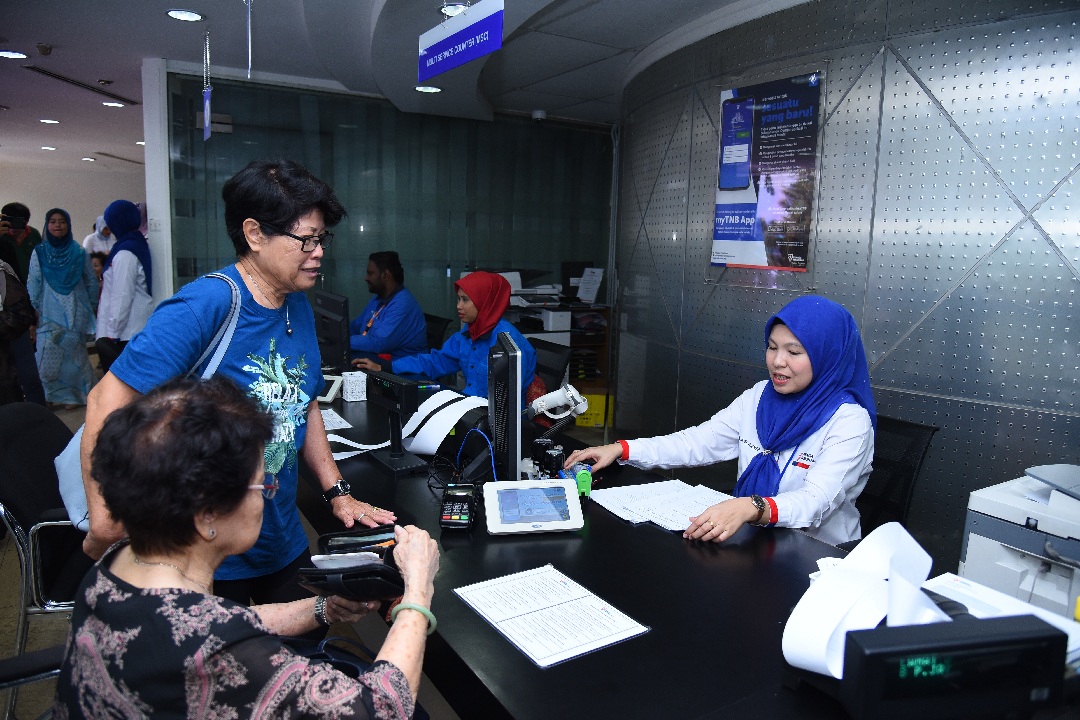
Human Rights Due Diligence (HRDD) and Human Rights Impact Assessment (HRIA) further strengthen the framework by providing structured mechanisms to consider human rights risks, alongside grievance channels through which concerns can be raised. These include whistleblowing, employee and vendor grievance channels, TNB CareLine, Kedai Tenaga and site-specific grievance mechanisms.
Integrating Human Rights into Project Assessments
A central element of strengthening TNB’s human rights practices is improving how potential human rights impacts are identified and addressed across relevant projects and activities.
TNB already undertakes environmental and social assessments for all relevant major developments on an ongoing basis. For projects subject to Environmental and Social Impact Assessment (ESIA) requirements, a social impact assessment is generally undertaken alongside the environmental assessment as part of the project's core approval process. Major energy projects can include power stations, hydropower and dams, cross-state transmission lines, hybrid-hydro floating solar and other large developments.
The Business and Human Rights Framework builds upon this existing process by aligning Environmental and Social Impact Assessment (ESIA) compliance with Human Rights Due Diligence (HRDD) and Human Rights Impact Assessment (HRIA) methodologies.
The framework also considers areas including responsible land use, Indigenous and local land rights, and Free, Prior and Informed Consent (FPIC) where applicable.
FPIC is particularly relevant where projects may affect Indigenous communities. It provides a structured process for engaging affected communities early, providing information, facilitating consultation and considering community views throughout project development. This strengthens the connection between project assessment, stakeholder engagement and the management of potential impacts.
Strengthening Engagement, Grievance and Remedy
Assessing impacts is only one part of respecting human rights. People affected by business activities must also have channels through which they can raise concerns.
TNB has grievance mechanisms serving different stakeholder groups, ranging from internal employees and vendors grievance channels to customer-facing channels. For projects where community impacts may be more pronounced, site-specific grievance mechanisms can provide an additional local channel.
An example is TNB’s Nenggiri Hydroelectric Project, where a site-specific community grievance mechanism has been established as part of engagement with communities affected by the project. This provides an important connection between identifying human-rights risks and responding when concerns arise.
Since 2015, TNB has undertaken human rights consultations and social impact assessments in relation to affected Orang Asli communities. A fully funded resettlement programme was implemented, covering 244 households and more than 1,200 individuals. TNB has continued to engage relevant stakeholders, including Jabatan Kemajuan Orang Asli (JAKOA), Human Rights Commission of Malaysia (SUHAKAM), state and federal authorities, and civil society organisations, with emphasis on the principles of Free, Prior and Informed Consent (FPIC), fair compensation, cultural sensitivity and inclusive development. These efforts are intended to help ensure that the rights, interests and well-being of affected Orang Asli communities remain central to the project.
Other examples include projects under Spark Renewables, where community consultations and a social impact assessment were conducted during the early stages of project development. An ongoing grievance mechanism is also in place to enable community feedback to be systematically reviewed and, where relevant, incorporated into the Social Impact Management Plan (SIMP).
Where TNB identifies that it has caused or contributed to an adverse human-rights impact, TNB is committed to taking appropriate steps towards remediation for affected parties, guided by the nature and circumstances of the impact.
Supporting Children, Communities and Vulnerable Consumers
The Business and Human Rights Framework also recognises that the effects of business activities may differ across stakeholder groups, particularly those who may be more vulnerable to social or economic impacts.
TNB recognises children’s rights as reflected in the UN Convention on the Rights of the Child and the Children’s Rights and Business Principles, and is committed to considering and safeguarding these rights across its operations and supply chain.
Under the framework, supporting children’s rights forms part of TNB’s Local Community Livelihood focus area, extending its consideration beyond the prohibition of child labour. Existing community initiatives provide practical examples of how TNB supports the wellbeing and development of children and families.
Initiatives such as Baiti Jannati, Ceria ke Sekolah and Better Brighter Shelter support needs associated with electricity, water, education and community wellbeing.
The framework also recognises the needs of vulnerable electricity consumers. Existing practices include support for medically dependent customers and lower-income households, including eligible customers who receive assistance through the e-Kasih electricity rebate programme.
Taken together, these measures demonstrate how TNB’s human rights commitments extend beyond workforce considerations to the people and communities connected to its business activities and services.


Embedding Human Rights into Responsible Business
Embedding human rights into business practices also requires internal awareness and capability. To support this, TNB is integrating human rights considerations into employee learning and development initiatives.
In 2025, 601 employees participated in a human rights webinar conducted by the Human Rights Commission of Malaysia (SUHAKAM), which covered human rights in the business context, workplace harassment prevention, disability inclusion and autism awareness.
The framework also advances TNB’s approach by helping to identify potential impacts, engage affected stakeholders, strengthen assessment and mitigation and provide access to grievance and remedy.
As Malaysia's electricity system evolves and new infrastructure is developed to support the energy transition, these considerations will become increasingly important. Responsible development is not only about what infrastructure is built or how quickly the energy system changes. It is also about how people are considered throughout that change.
For TNB, the Business and Human Rights Framework provides a more structured foundation for integrating human rights considerations into business practices while supporting the nation’s progress in a responsible manner.