As Malaysia advances towards a lower-carbon energy system, decarbonisation efforts are increasingly extending beyond generation to include the infrastructure that supports reliable electricity delivery. For Tenaga Nasional Berhad (TNB), this includes the Distribution Network, which plays an essential role in delivering electricity safely and consistently to millions of customers nationwide.
At the core of this network are medium voltage (MV) switchgear systems, which control, protect and isolate electrical equipment.
In simple terms, switchgear regulates the flow of electricity, allows sections of the network to be safely isolated for maintenance, and protects equipment and personnel exposure by interrupting faults when they occur. This function is critical in ensuring that electricity supply remains stable, safe and reliable across the distribution system.
These systems have traditionally relied on Sulphur Hexafluoride (SF₆) due to its superior insulating and arc-quenching properties, supporting compact designs and reliable performance across a wide range of operating environments.
Overview of Distribution-Level Switchgear Asset
TNB's distribution network comprises a substantial installed base of SF₆ insulated equipment, primarily in the form of 33kV Gas-Insulated Switchgear (GIS) and 11kV Ring Main Units (RMUs).
As of the latest assessment, more than 73,000 SF₆ insulated units are currently in operation across the distribution network, collectively containing approximately 402,549 kg of SF₆. This reflects decades of network development, where SF₆ based technologies have been widely adopted due to their proven performance, compactness and suitability for Malaysia’s operating conditions.
These assets remain integral to maintaining system stability, particularly in urban and high-load areas where space constraints and reliability requirements are critical.
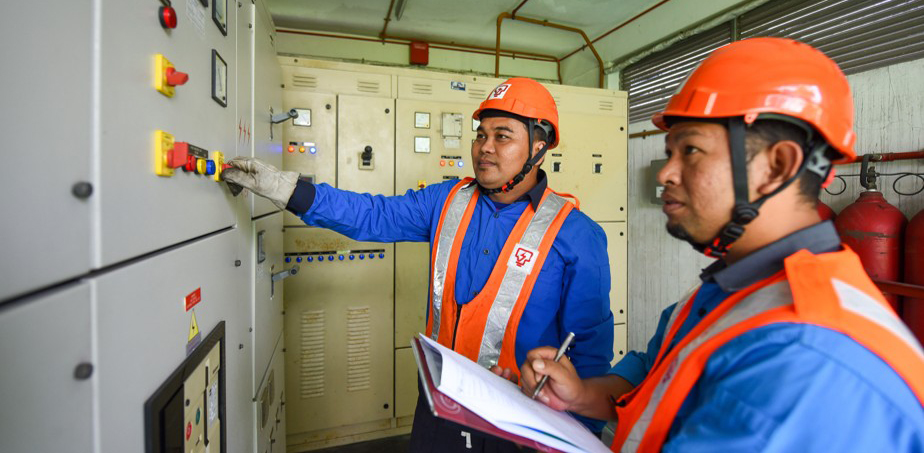
Reassessing SF₆ in the Context of Environmental Consideration
While SF₆ continues to play an important role in ensuring safe and efficient operation, it is also recognised for its exceptionally high Global Warming Potential (GWP) compared to carbon dioxide.
Although emissions are managed through established handling and maintenance practices, the cumulative presence of SF₆ across the existing asset base presents a longer-term environmental consideration. Over time, even minor emissions may contribute to overall greenhouse gas impact.
In this context, attention is gradually shifting from solely managing SF₆ to identifying practical pathways to reduce reliance on it over time.
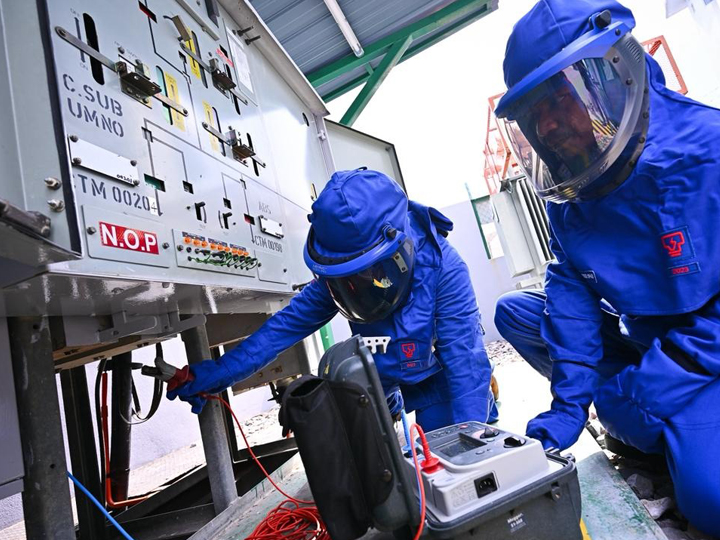
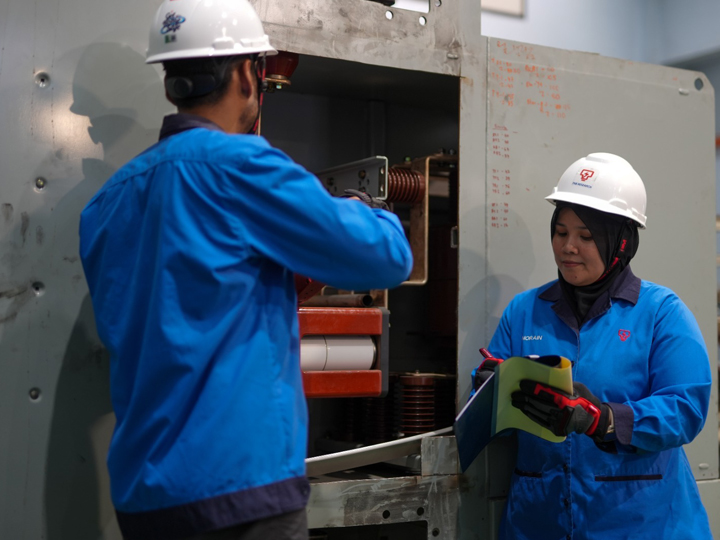
Exploring Alternative Technologies
Advancements in technology have introduced a range of alternatives to conventional SF₆ based switchgear. However, their application at the distribution level depends on operational, technical and environmental considerations.
Approaches such as clean air insulation and vacuum-based technologies are among the options being evaluated, alongside other emerging solutions with lower environmental impact. The suitability of these technologies varies depending on system configuration, installation constraints and operating conditions.
The Hybrid GIS Transition
One such approach involves the development of Hybrid Gas Insulated Switchgear (HGIS), introduced through collaboration with equipment manufacturers. This concept reflects an effort to optimise existing designs while reducing dependence on SF₆.
This design introduces an architectural enhancement by utilising screened busbars that do not require enclosure within SF₆-filled compartments. By reducing the extent of gas-insulated components, the design enables a lower volume of SF₆ to be used within the system.
For a typical primary distribution substation (PPU), this approach is expected to reduce the SF₆ footprint for combined 33 kV and 11 kV switchgear by approximately 100 kilograms, representing an estimated 20 to 30% reduction per substation.
Implementation is currently underway, with initial deployments planned across selected primary substations in phases beginning in 2027.
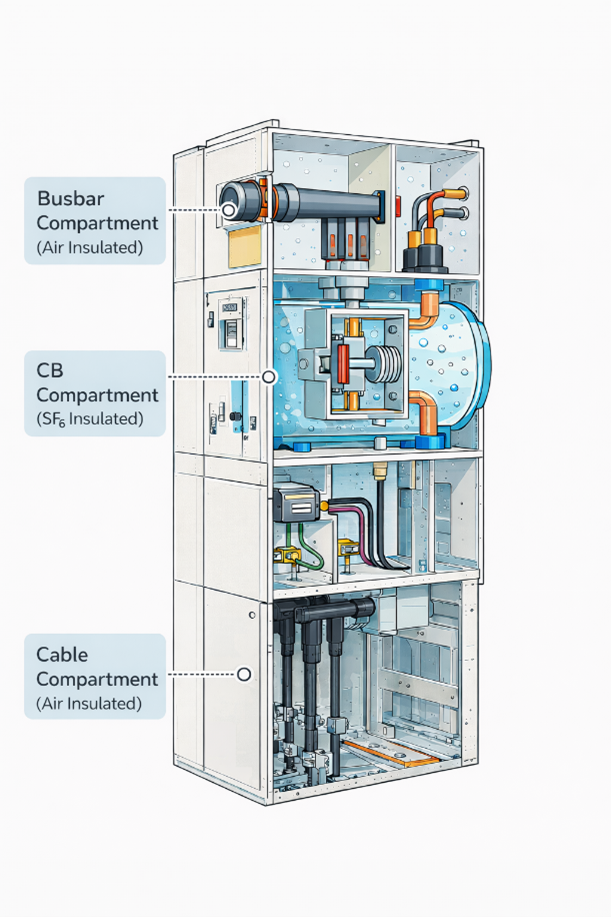
Figure 1: Hybrid Gas Insulated Switchgear (HGIS) design
[AI-Generated Conceptual Illustration (NotebookLLM)]
Piloting SF₆ Free Solutions
In parallel with efforts to reduce SF₆ usage, TNB is also evaluating technologies that enable a transition away from the gas entirely.
Clean air insulation technologies, which utilise natural atmospheric gases or synthetic dry air mixtures, are among the options being assessed.
To support this evaluation, pilot deployments of SF₆ free switchgear are planned at selected locations across the distribution network. Initial installations will be carried out at secondary substations within the Kuala Lumpur network, covering both SF₆ free Ring Main Units and Gas-free Hybrid GIS (G-HGIS) configurations.
These pilots will serve as a basis for assessing real-world performance under local operating conditions, with findings used to inform broader deployment decisions.
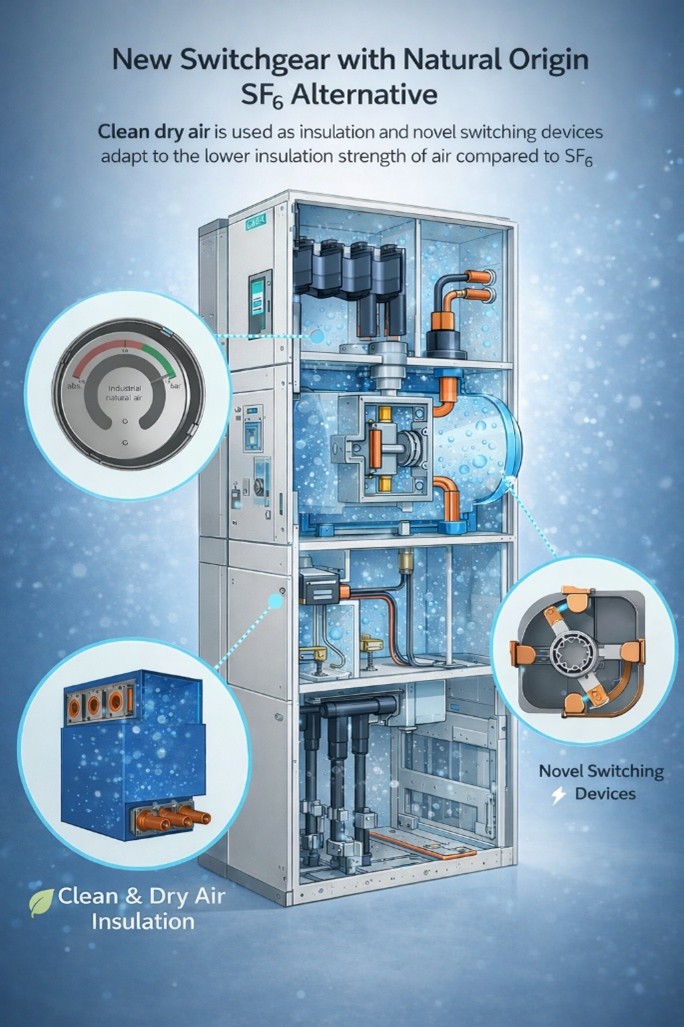
Figure 2: Clean Air Mechanism
[AI-Generated Conceptual Illustration (NotebookLLM)]
Moving Forward with a Measured Transition
TNB's transition approach is guided by asset lifecycle planning rather than immediate large-scale replacement. Existing SF₆ assets will continue to be managed responsibly throughout their operational life, with lower-emission alternatives considered progressively as equipment reaches end-of-life.
As a regulated utility, TNB's priority remains the delivery of reliable, safe and affordable electricity. Changes to core infrastructure are therefore approached with care, ensuring that system performance and operational integrity are not compromised. The adoption of alternative technologies is guided by their suitability within the local operating environment, supported by appropriate technical validation and operational readiness.
Insights from pilot initiatives and innovation programmes will inform future deployment strategies, supporting a structured transition. As part of longer-term planning, TNB is also exploring increased adoption of lower-emission technologies in new installations, subject to technology readiness, operational suitability and regulatory alignment.
Supporting a Broader, System-Wide Transition
While largely unseen by end-users, distribution-level infrastructure plays an important role in shaping the overall environmental footprint of the electricity system.
The gradual transition away from SF₆ based technologies complements TNB’s broader efforts in renewable energy expansion, grid modernisation and digitalisation, contributing to the development of a more sustainable and future-ready electricity network.