Across Malaysia’s island communities, ensuring reliable electricity supply presents unique operational challenges. Limited grid connectivity, dependence on diesel generation and logistical constraints have historically shaped how electricity is transmitted to remote islands. As energy systems evolve and sustainability considerations grow in importance, innovative approaches are being explored to provide cleaner, more resilient and efficient energy solutions.
In this context, Tenaga Nasional Berhad (TNB) has been implementing the Smart Green Islands initiative, also known as Pulau Tenaga Hijau since 2022. The programme focuses on transforming selected island energy systems into smart, integrated microgrids powered by renewable energy, supported by energy storage and digital monitoring technologies.
The initiative currently covers Pulau Tioman, Pulau Redang and Pulau Perhentian, where distributed renewable energy and smart grid technologies are gradually reshaping how electricity is generated, distributed and managed.
Together, these islands demonstrate how clean energy integration, digital monitoring and energy efficiency improvements can support more sustainable island operations while enhancing energy resilience for local communities.
Positioning the Smart Green Island Development Framework
The development of Pulau Tenaga Hijau is guided by the Smart Green Island Development Framework, which outlines a structured pathway for transforming island energy systems into resilient, low-carbon microgrids. The framework progressively advances from establishing visibility of energy demand and infrastructure, to integrating renewable energy resources, enabling digital monitoring and automation, and optimising energy systems through intelligent management technologies. By aligning renewable energy deployment, smart grid technologies and community energy initiatives within this framework, the participating islands provide a practical demonstration of how isolated energy systems can evolve towards more sustainable and resilient energy ecosystems.
Within this roadmap, Pulau Tioman, Pulau Redang and Pulau Perhentian function as pilot sites, illustrating how renewable energy integration and smart grid technologies can enhance energy reliability while supporting more sustainable island operations.
Integrating Renewable Energy and Smart Infrastructure
Renewable energy systems form a central component of the Smart Green Islands initiative, supported by infrastructure upgrades designed to improve efficiency, safety and operational visibility.
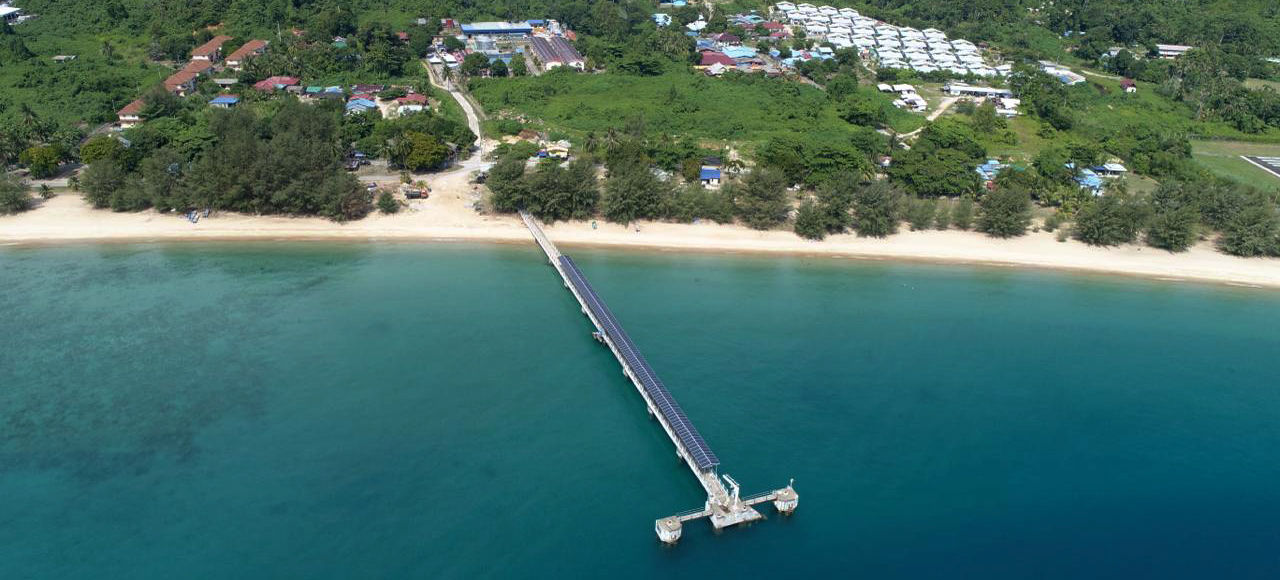
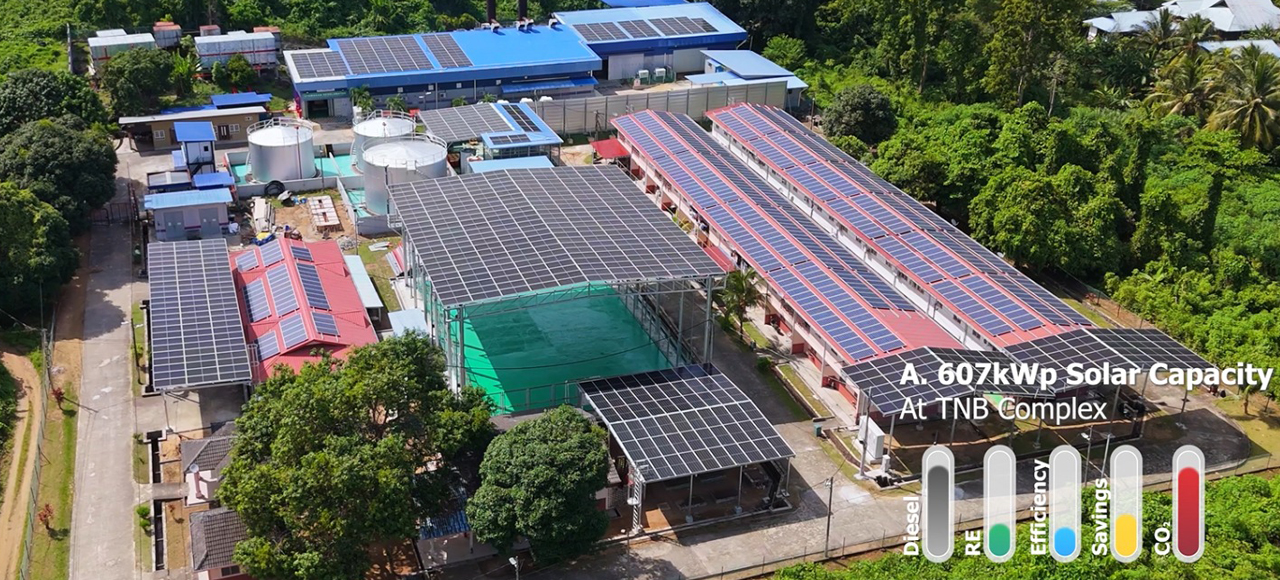
At Pulau Tioman, solar installations currently generate approximately 676 kWp of renewable energy, including 607 kWp from Building Integrated Photovoltaic (BIPV) systems at the TNB complex and 69.39 kWp installed at the island jetty. These systems are supported by two mini-hydro units with a combined capacity of 500 kW, contributing additional renewable power to the island’s energy mix.
Energy efficiency improvements have also been introduced across the island. A total of 307 LED streetlights have replaced conventional lighting systems, enhancing visibility and accessibility at night while reducing electricity consumption. Pulau Tioman’s energy assets will also be monitored through the Smart Energy Management Infrastructure (SEMI), providing greater operational visibility across the island’s electricity network.
Across the other participating islands, renewable energy and smart infrastructure upgrades have also been implemented.
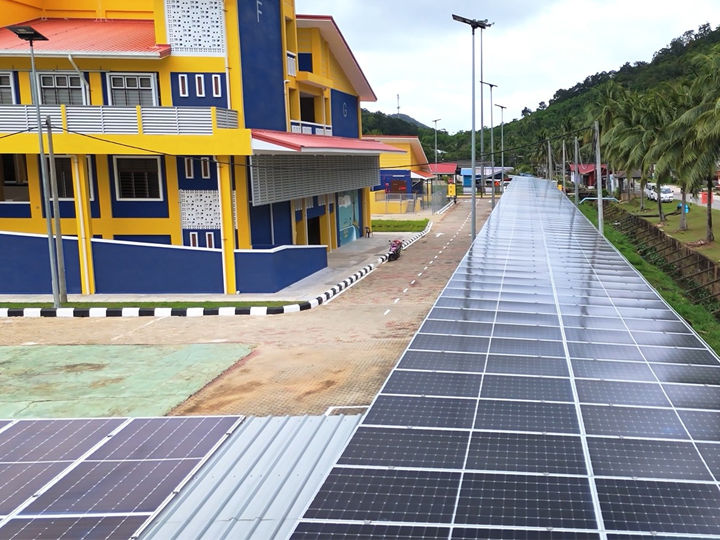
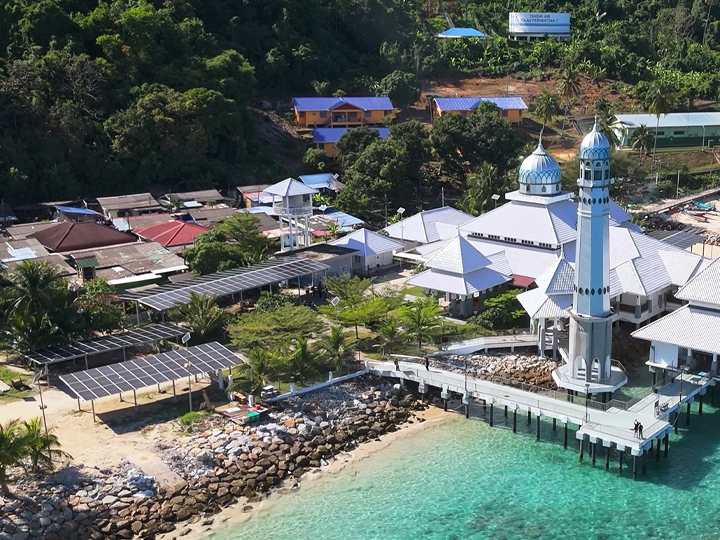
At Pulau Redang, BIPV systems include 120 kWp installed at Sekolah Kebangsaan Pulau Redang and 191.4 kWp at the island mosque, supported by 526 smart meters and 124 LED streetlights across the island. Beyond generating renewable energy, these installations are also designed to deliver practical benefits to the local community.
The BIPV structure at Sekolah Kebangsaan Pulau Redang functions as a covered pedestrian walkway and sheltered bicycle parking area, enhancing comfort and safety for students and teachers, while the mosque installation serves as a covered open hall that supports community activities and gatherings organised by the local community. Together, these dual-purpose designs demonstrate how renewable energy infrastructure can be integrated with community needs, enhancing both functionality and social value.
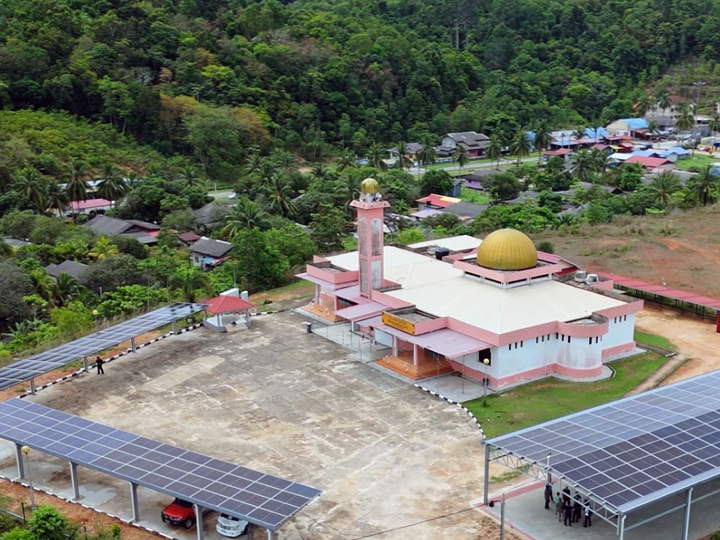
Similarly, Pulau Perhentian hosts a 120 kWp solar photovoltaic system installed at the island mosque, complemented by 312 smart meters and 52 LED streetlights across the island.
Collectively, these upgrades contribute to improved energy efficiency while supporting smarter electricity management across the island microgrids.
Enabling Intelligent Energy Management
Beyond renewable generation, the Smart Green Islands initiative introduces digital monitoring and smart grid technologies that enable near real-time visibility of electricity assets and consumption patterns.
At Pulau Tioman, Smart Energy Management Infrastructure (SEMI) supported by Geographic Information System (GIS) technology provides visibility of key electricity assets across the island. This digital platform enables TNB to monitor system performance and operational status more effectively, supporting improved maintenance planning and operational oversight.
Meanwhile, the installation of smart meters on Pulau Redang and Pulau Perhentian provide enhanced insight into electricity consumption patterns, helping to promote more efficient energy use and enabling potential electricity savings for island communities.
Looking ahead, Pulau Tioman is expected to integrate a centralised Energy Management System (EMS) in October 2026, which will further strengthen monitoring and optimisation of the island’s energy system.
Managing Energy through a Balanced Daily Cycle
A key feature of the Smart Green Islands initiative is the implementation of an intelligent energy cycle, designed to optimise the use of renewable energy throughout the day.
During daylight hours, solar photovoltaic systems generate electricity to meet a significant portion of the island’s energy demand. Any excess electricity generated will be stored in battery energy storage systems, allowing renewable energy generated during the day to be used later when demand increases.
In the evening, stored battery energy will be released back into the grid, helping to support electricity demand while maintaining grid stability.
This approach enables the islands to reduce reliance on diesel-based generation while maintaining reliable power supply, particularly during peak evening hours.
Delivering Environmental and Operational Benefits
The Smart Green Islands initiative has already demonstrated measurable operational and environmental benefits across the participating islands.
Renewable energy integration and energy efficiency improvements on Pulau Tioman contribute to an estimated annual reduction of approximately 1,042 tonnes of carbon dioxide equivalent (tCO₂e) while reducing diesel fuel consumption by approximately 2.1 million litres annually.
On Pulau Redang, the initiative contributes to annual emissions reductions of approximately 398.45 tCO₂e, alongside estimated diesel savings of 105,608 litres per year.
Similarly, Pulau Perhentian records annual emissions reductions of approximately 179.95 tCO₂e, supported by diesel savings of about 47,697 litres annually.
Beyond environmental benefits, these initiatives also contribute to improved lighting, enhanced public safety and greater operational visibility of electricity infrastructure across the islands.
In implementing these initiatives, environmental considerations have also been carefully incorporated. Pulau Tioman, Pulau Redang and Pulau Perhentian are located within designated marine park areas, where ecological sensitivity is a key priority. Project development and infrastructure upgrades have therefore considered the need to minimise environmental impact, ensuring that renewable energy deployment aligns with the preservation of surrounding marine and coastal ecosystems.
Supporting a Scalable Model for Sustainable Island Energy Systems
As implementation progresses, additional renewable energy capacity, energy storage systems and network upgrades are planned across the islands. These enhancements will further strengthen energy reliability and enable greater integration of renewable energy sources within the island microgrids.
The Smart Green Islands initiative reflects TNB’s broader efforts to explore cleaner, digitally enabled and resilient energy systems, particularly for geographically isolated communities.
By integrating renewable energy, energy storage and intelligent grid management, Pulau Tenaga Hijau provides a practical demonstration of how sustainable energy systems can be implemented in island environments.
As Malaysia advances its energy transition, lessons from these island initiatives may also offer valuable insights for future applications in other remote or off-grid communities.