Malaysia’s transition towards a lower-carbon energy system is changing not only how electricity is generated and delivered, but also how customers consume, manage and make choices about energy.
For the transition to be just and inclusive, customers need practical opportunities to participate, regardless of their resources, infrastructure or readiness to adopt new technologies. Customers differ significantly in their energy needs, operational requirements, financial considerations and readiness to decarbonise.
This means there cannot be only one pathway into the energy transition.
Customer empowerment forms an important part of the transition. Through TNBX Sdn. Bhd. (TNBX), a wholly owned subsidiary of TNB, customers are being provided with a growing range of green and digital energy solutions that allow them to participate according to their respective needs and circumstances.
TNBX is positioned as the beyond-kWh growth platform, with a strategic focus on facilitating renewable energy access, empowering businesses through energy efficiency, and supporting customer participation through innovation and new technologies. Its portfolio spans renewable energy solutions, digital energy management, electric mobility and carbon data services.
Different Starting Points, Different Pathways
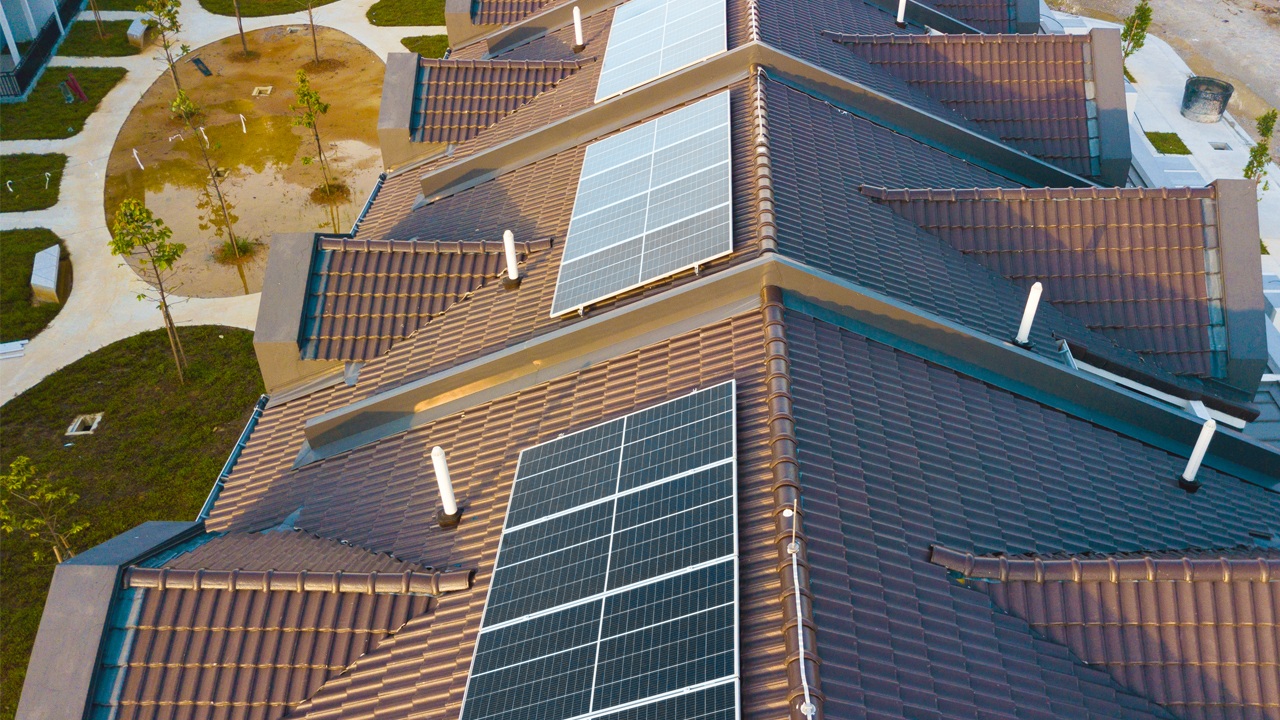
For some customers, participating in the energy transition may mean generating renewable electricity on their own premises. For others, physical or financial constraints may make on-site renewable energy installations less practical.
Some businesses may instead need better visibility over how much energy they consume before determining where efficiency improvements can be made. Larger organisations may be focused on obtaining reliable electricity-consumption data to support emissions reporting, while EV owners need accessible charging infrastructure that allows them to make the shift towards electric mobility.
TNB responds to these different starting points by providing multiple pathways into cleaner and more efficient energy use. This reflects an important dimension of a Just Transition - enabling participation without assuming that every customer has the same resources, capabilities or requirements.
Making Renewable Energy More Accessible
One pathway is through the Supply Agreement for Renewable Energy (SARE), introduced in 2019.
SARE is a tripartite arrangement involving TNB, a registered solar PV investor and the customer. It establishes the responsibilities of the parties relating to the solar PV system, metering, billing and collection, while allowing electricity supplied from the grid and electricity generated from the solar installation to be reflected through a single convergence bill.
The arrangement is currently available to commercial, industrial and Government customers in Peninsular Malaysia. Importantly, the model can support customers seeking to adopt solar without necessarily having to own the solar generation asset themselves.
As of July 2026, SARE had facilitated 2,649 solar PV projects involving 137 registered solar PV investors, with a total solar PV capacity of 806 MWp.
For organisations where installing their own renewable energy system may not be practical, Malaysia Renewable Energy Certificates (mRECs) offer an alternative pathway to support their renewable electricity goals. Each mREC represents the environmental attributes associated with renewable electricity generated and delivered to the grid.
Through the Green Electricity Tariff (GET) programme, customers can subscribe to green electricity bundled with mRECs, supporting their renewable electricity commitments and market-based Scope 2 emissions reporting. Together, these mechanisms broaden the ways customers can participate, from adopting physical solar installations to procuring the environmental attributes associated with renewable electricity.
Beginning with Energy Efficiency
Participation in the energy transition does not always have to begin with new generation technology. For many organisations, understanding and managing existing electricity consumption can be an equally important starting point.
TNB’s Virtual Energy Manager (VEM) provides a digitalised energy-management solution capable of collecting and analysing energy data in real time. The platform supports energy-data visualisation, maximum-demand monitoring, consumption analysis, energy reporting and energy-management strategies.
By consolidating information that might otherwise require manual monitoring, VEM is designed to help facility and energy managers identify where energy is being consumed and where opportunities for optimisation may exist.
Its capabilities include maximum-demand prediction and management intelligence, automated monitoring based on TNB meter readings and notifications about building energy consumption performance.
Energy efficiency is particularly relevant to a Just Transition because reducing unnecessary consumption can help organisations manage electricity costs while reducing emissions associated with purchased electricity.
Giving Businesses Better Visibility of Their Carbon Footprint

As sustainability disclosure requirements evolve, the ability to participate in the transition increasingly depends on access not only to technology, but also to reliable data.
For companies managing multiple electricity accounts, gathering historical electricity consumption information can involve manual collection, spreadsheets, reconciliation and validation. TNB identifies these processes as common pain points for organisations preparing Scope 2 emissions information.
Its Carbon Data Platform (CDP) has been developed to address this gap by using TNB’s billing architecture to provide participating organisations with account-level electricity data.
The platform is designed to allow users to select their electricity accounts, analyse consumption and associated Scope 2 emissions, view up to three (3) years of information, and generate reporting outputs. By centralising electricity-consumption data and automating key processes, the platform can help customers move from fragmented manual processes towards more streamlined and audit-ready reporting. As of 6 August 2026, TNB had introduced the platform to 22 publicly listed companies across the banking, utilities and oil and gas sectors, with five (5) companies registering their interest. The platform is expected to go live in the first week of September 2026.
The significance goes beyond digitalisation. Better access to credible energy data can help organisations understand where they are today before determining how quickly they can reduce emissions.
Expanding Access to Electric Mobility
The transition is also changing how Malaysians move.
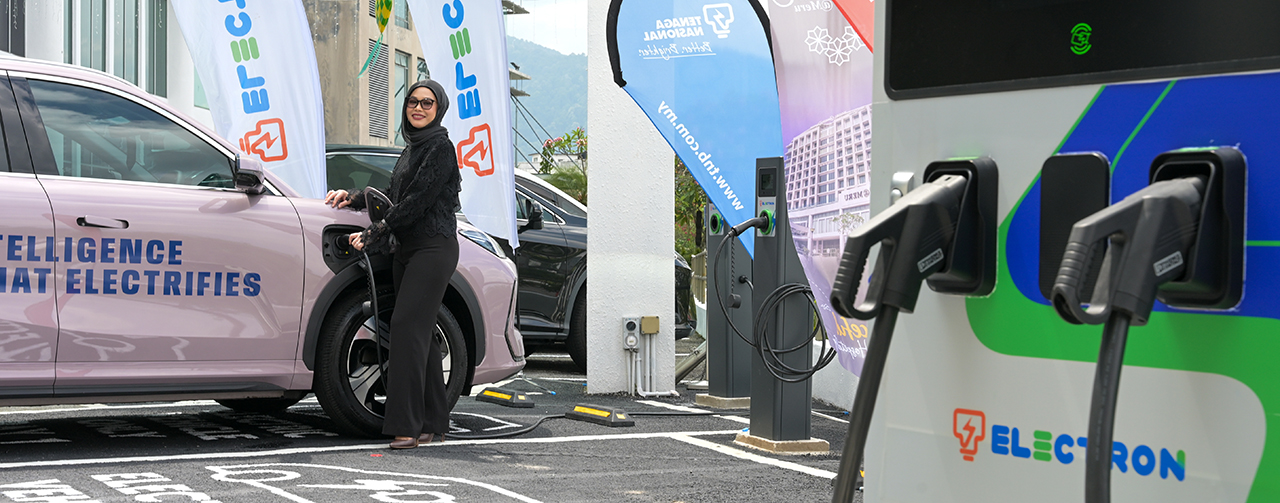
Through TNB Electron, TNB operates within the electric vehicle (EV) charging ecosystem as a Charge Point Operator (CPO) and EV charging platform owner, connecting EV users with charging infrastructure while supporting charger operations, customer service and payment functionality.
As of July 2026, TNB Electron’s charging network comprised:
- 74 Charging locations nationwide
- 99 Charger units
- 216 Charge points in operation
- 480 kW Maximum charging capacity per site
- 6 Maximum charging bays per site
- ~100 km Driving-distance coverage between locations
The charging network includes locations across highways, urban areas, offices, malls and trunk roads, including locations outside the major city centres.
Accessibility is also being considered at the point of use. TNB Electron supports both app-based payment and contactless card payment, reducing dependence on a single digital interface for charging transactions.
Building a broader and more convenient charging network is important for increasing confidence in EV adoption. As infrastructure expands beyond the most commercially attractive locations, it can progressively make electric mobility a practical option for a wider group of motorists.
Protecting Customers After They Make the Transition
Enabling adoption is one part of the transition. Helping customers manage the risks associated with their investment is another.
Solar PV systems typically carry manufacturer warranties covering specified equipment defects, but unexpected incidents or damage may create additional financial exposure for system owners.

TNB therefore offers SuriaShield, a solar PV insurance solution developed for customers with installed solar PV systems or those in the process of installing one. The product provides protection that includes repair and restoration as well as compensation for loss of income or savings during qualifying periods when the solar PV system is unable to generate electricity.
The product illustrates another aspect of inclusion in the energy transition: customers need access not only to green technologies, but also to mechanisms that can help protect the investments they make in adopting them.
An Ecosystem of Options Rather Than a Single Solution
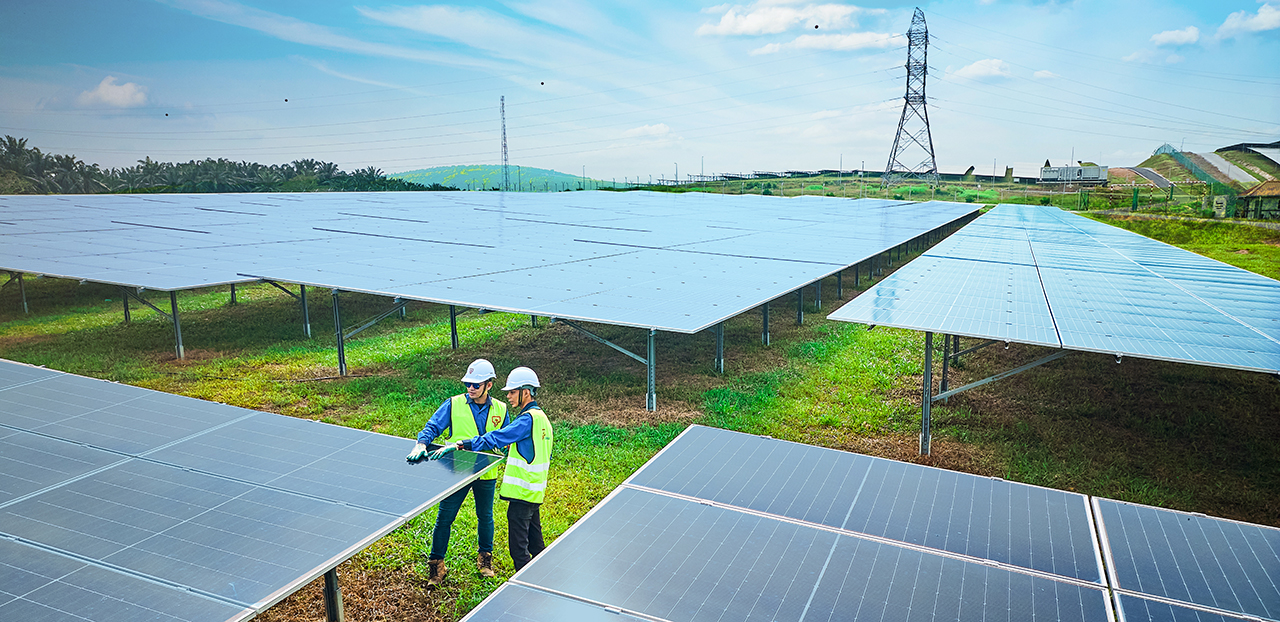
Taken individually, SARE, renewable energy certificates, VEM, the Carbon Data Platform, TNB Electron and SuriaShield address different customer needs.
Taken together, however, they demonstrate a broader approach.
-
Businesses
A business unable to invest directly in its own renewable energy installation can explore alternative arrangements for renewable energy access.
-
New to Sustainability
An organisation beginning its sustainability journey can first understand and optimise its electricity consumption.
-
Public Listed Co.
A publicly listed company can gain better access to information required for Scope 2 reporting.
-
EV Motorists
A motorist considering an EV can increasingly rely on an expanding public charging network.
-
Solar PV Owners
A solar PV owner can obtain additional protection for an investment already made.
The objective is therefore not to prescribe a single route towards decarbonisation, but to progressively broaden the choices available.
This complements TNB’s Energy Transition Plan, under which customer participation, electrification, energy efficiency, prosumers and digital platforms are part of the Group’s approach to enabling the transition on the energy-use side of the electricity value chain.
TNB is progressively building an ecosystem in which customers can begin from where they are today and adopt solutions suited to their circumstances while retaining opportunities to move further along their sustainability journey over time.
In this way, customer empowerment becomes an important part of TNB’s Just Transition approach: not requiring everyone to take the same path but creating more pathways so that more people and businesses have the opportunity to move forward with the transition.