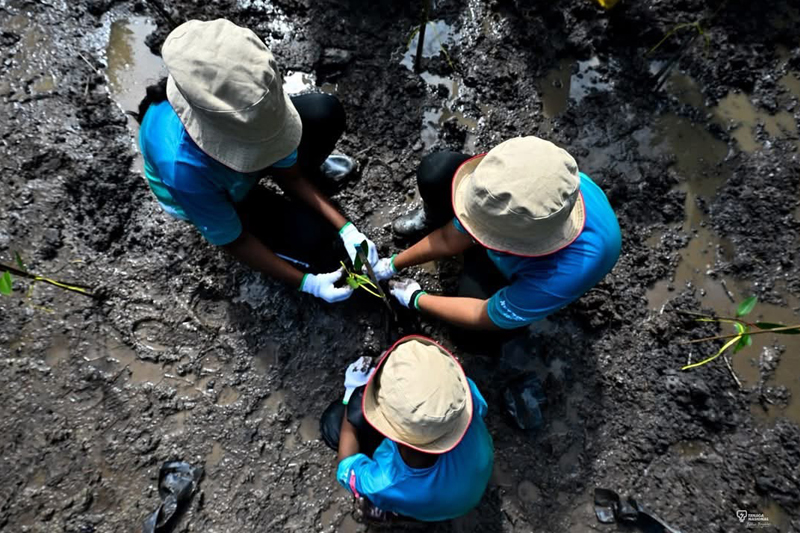
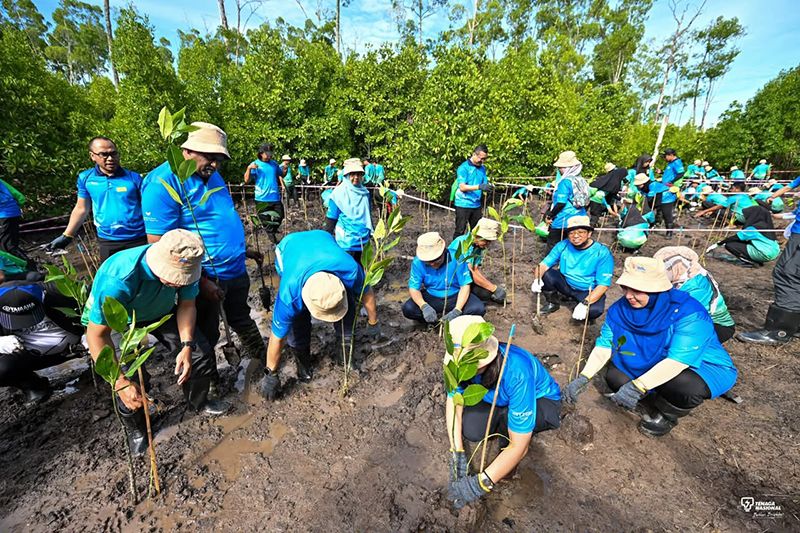
Tenaga Nasional Berhad (TNB) planted 25,000 mangrove saplings at Tanjung Burung, Pantai Remis, Perak under the My Brighter Green Initiative (MBGI) 2026, helping to restore an important coastal ecosystem while supporting biodiversity, shoreline protection and community stewardship.
The ecological importance of mangroves is particularly significant in Perak. Of the state’s 988,723.93 hectares of Permanent Reserved Forest, 43,115.80 hectares comprise mangrove forest. Although representing only 4.3% of the total, these coastal forests perform important functions as natural buffers, carbon sinks and habitats for marine and terrestrial biodiversity. Their sustainable management is also closely linked to the continued development of Perak’s blue economy.
It is within this landscape that TNB's My Brighter Green Initiative (MBGI) 2026 continued its nationwide restoration journey at Hutan Simpan Tanjung Burung in Pantai Remis.
A Major Step in A Nationwide Restoration Journey
MBGI 2026 targets the planting of 40,000 forest and mangrove saplings at six locations across Malaysia. More than a tree-planting programme, the initiative combines ecosystem restoration with community participation, technical collaboration, monitoring and continued maintenance.
Following the planting of 10,000 mangrove saplings at Kubang Badak, Langkawi, TNB planted a further 25,000 mangrove saplings at Tanjung Burung, Pantai Remis. The Tanjung Burung site therefore represents the largest single planting location under MBGI 2026, accounting for 62.5% of the annual programme target.
Together, the Langkawi and Tanjung Burung locations brought the initiative to 35,000 trees, equivalent to 87.5% of the 2026 planting target, across the first two locations.
Yet the significance of Tanjung Burung is not defined by numbers alone. The location reflects the importance of restoring the right ecosystem in a place where mangroves are closely connected to coastal protection, biodiversity, communities and the wider energy landscape.
Restoring The Natural Coastal Shield
The planting at Tanjung Burung focused on two mangrove species identified for the location: Rhizophora apiculata, commonly known as Bakau Minyak, and Rhizophora mucronata, or Bakau Kurap.
Through their extensive root systems, mangroves help retain sediment and reduce the effects of coastal erosion. They also create shelter, feeding areas and habitats for fish, crabs and other coastal species. As the trees mature, their environmental value extends beyond the planting area by supporting the wider health and resilience of the coastal ecosystem.
For TNB, this connection has added relevance in Tanjung Burung. Sultan Azlan Shah Power Station, or TNB Janamanjung, is located along the Perak coastline. Healthy mangrove ecosystems can help protect coastal shorelines from erosion, illustrating how the resilience of natural systems is connected to the communities and infrastructure situated within the wider coastal landscape.
The restoration at Tanjung Burung should therefore not be viewed as a direct physical intervention for one asset. Rather, it reflects a broader approach in which the health of coastal ecosystems forms part of the environmental context surrounding TNB’s operations and the communities it serves.
Mangrove Growth Over Time
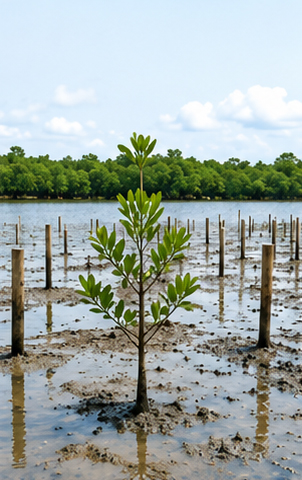
- Height: 0.3 – 1.0 m
- Young sapling stage
- Root system starts to develop
- Requires regular monitoring and protection from waves and trampling
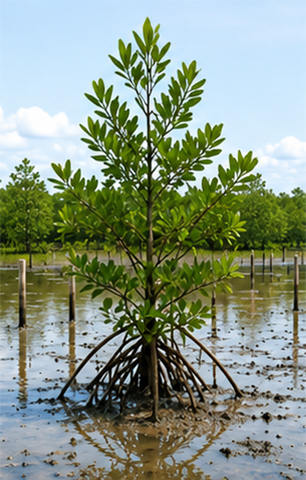
- Height: 1.0 – 2.5 m
- Stronger stem and more branches
- Prop roots start to develop and anchor the tree
- Increased survival rate and faster growth
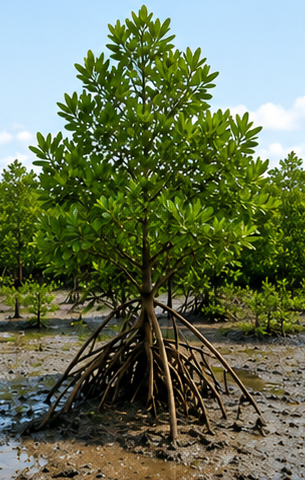
- Height: 2.5 – 4.0 m
- Well-developed prop root system
- Canopy becomes denser
- Improved resilience to waves and tidal flow
- Provides habitat for wildlife
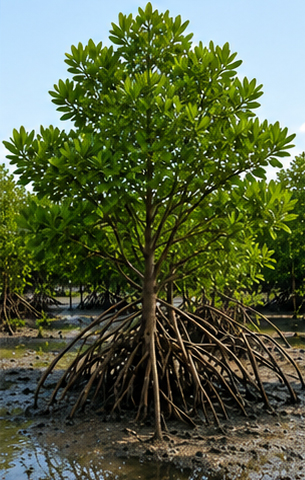
- Height: 4.0 – 6.0 m+
- Mature structure established
- Dense canopy provides shade and stabilizes the coastal area
- High ecological value and carbon sequestration potential
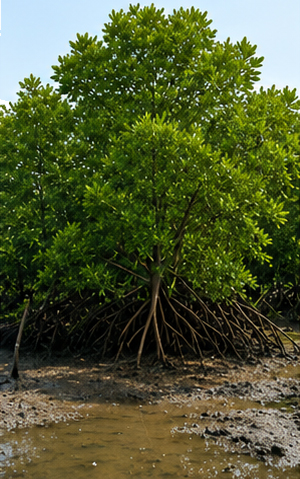
- Height: 6.0 m+
- Mature mangrove forest structure
- Strong coastal protection and biodiversity support
- Self-sustaining ecosystem
Collaboration Grounded in Local Knowledge
Mangrove restoration requires more than placing saplings in the ground. Site conditions, tidal movement, species suitability, planting methods and aftercare all influence whether the trees survive and whether the ecosystem can recover over time.
MBGI 2026 is implemented in strategic collaboration with the Malaysian Nature Society (MNS), whose role includes supporting the preparation and implementation of the planting programme, facilitating community and volunteer participation, and contributing to the longer-term monitoring and maintenance of the trees.
At Pantai Remis, this conservation expertise was complemented by the technical and local knowledge of the Perak State Forestry Department. The department provided guidance on appropriate planting methods and positioned the initiative within Perak's wider approach to sustainable mangrove forest management.
The programme also brought together the Manjung Municipal Council, Manjung District Office, community leaders, local communities, educational institutions and TNB employees. Each partner brought different expertise, from forest management and site coordination to conservation knowledge, local engagement and environmental education.
This collaborative model is important because the success of restoration depends on shared responsibility. Government agencies provide the regulatory and technical foundation, conservation organisations bring ecological expertise, while communities and educational institutions help sustain awareness and stewardship at the local level.
Turning Young Participants into Coastal Stewards
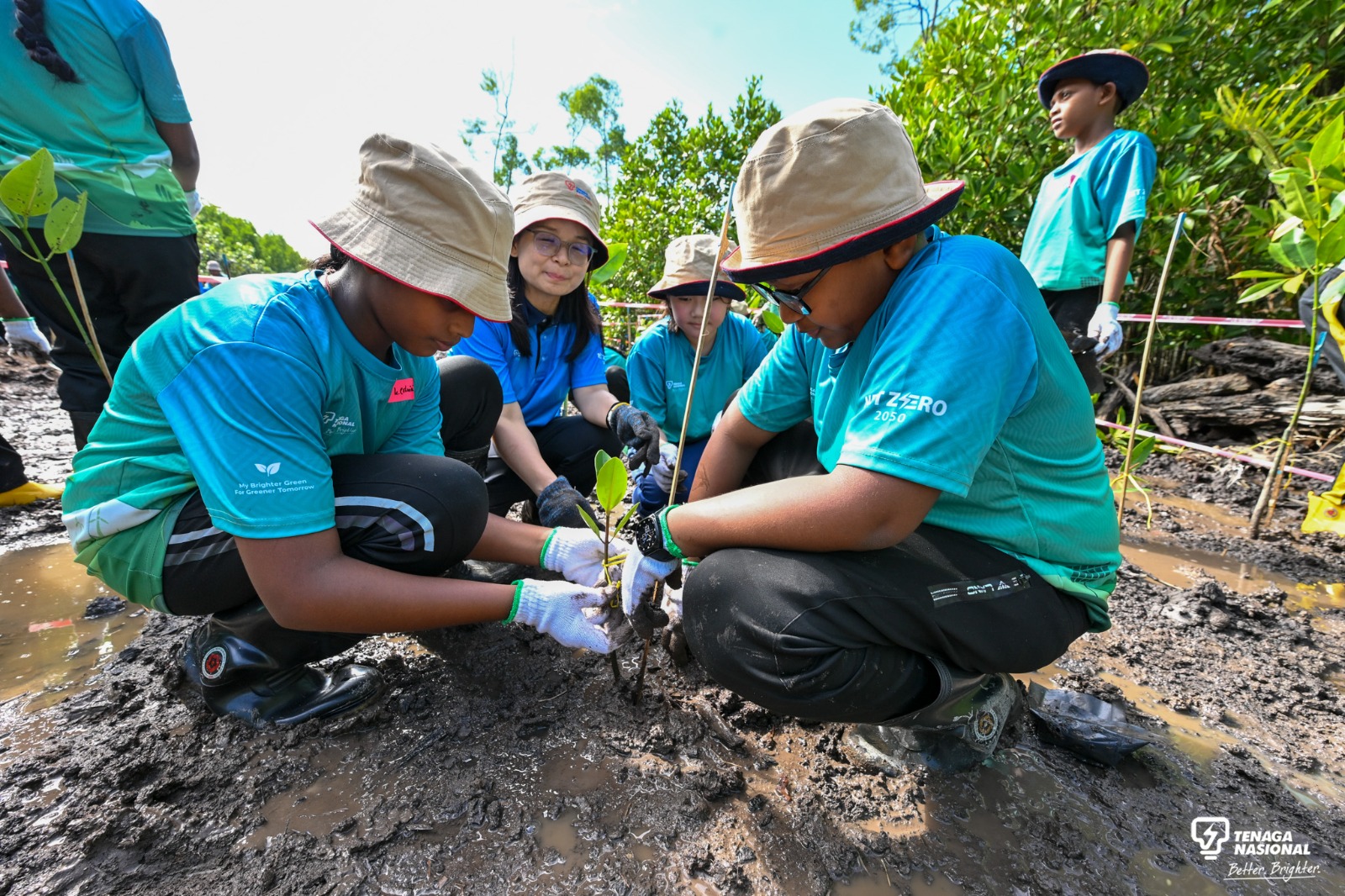
Education and community participation were central to the Pantai Remis programme.
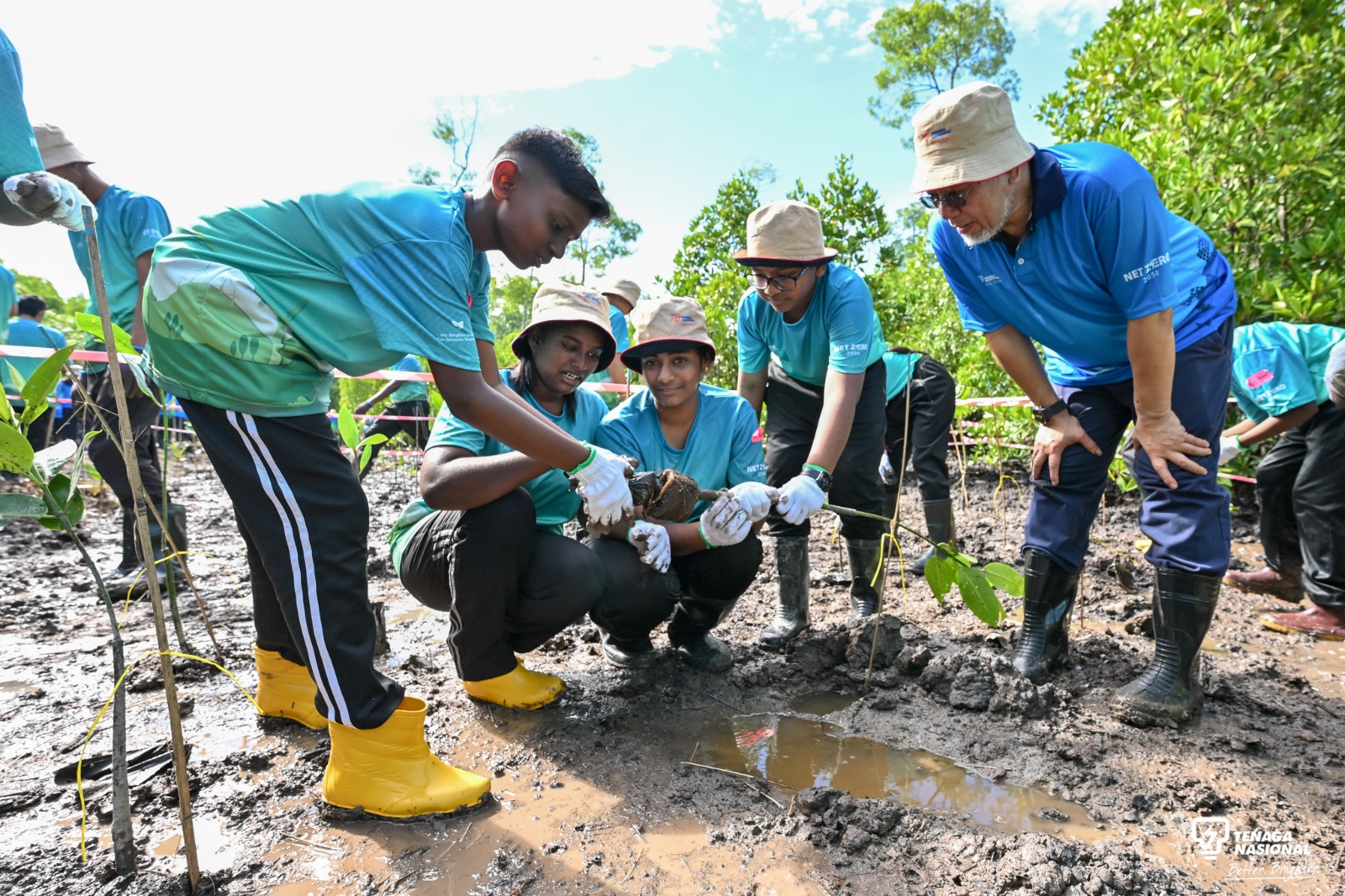
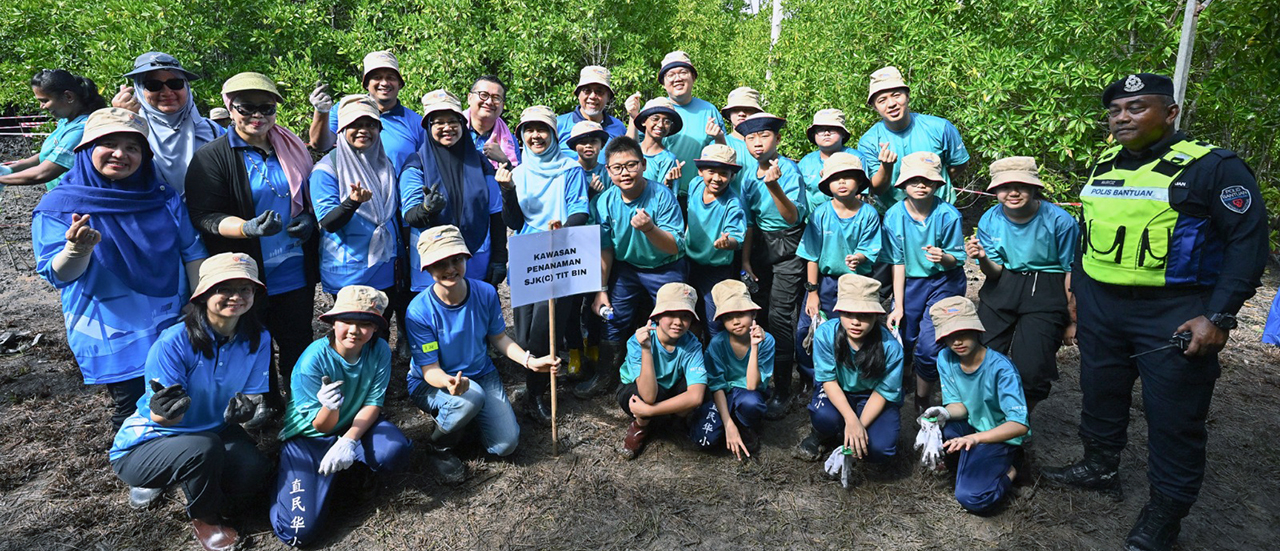
Around 70 students and teachers from four local schools joined TNB employees, government agencies and community representatives in the mangrove planting activity. Their participation provided an opportunity to understand the environmental role of mangroves through direct experience rather than through classroom learning alone.
For several students, the programme marked their first experience planting mangroves and gave them a more practical understanding of the trees’ environmental importance.
Such experiences are significant because environmental stewardship is built gradually. When young people take part in restoration, they begin to see mangroves not simply as trees growing in muddy coastal areas, but as living ecosystems that support wildlife, protect shorelines and contribute to the well-being of surrounding communities.
The objective is not simply to raise awareness for a single day, but to encourage a generation that understands why these ecosystems must be protected.
Connecting Ecosystem Restoration with Community Needs
The Pantai Remis initiative also extended beyond the mangrove planting site.
Community support was provided to five educational institutions namely SK Panchor, SJK(T) Pengkalan Baru, SJK(C) Tit Bin, SMK Dato Idris and Sekolah Menengah Agama Rakyat Tarbiyatul Ajyal, to strengthen educational resources and learning programmes. Masjid Al-Aliah in Pantai Remis also received support for community and mosque-related activities.
This combination gives the initiative a more grounded local meaning. The environmental component supports the coastal ecosystem, while the community component recognises the schools, institutions and people who are part of the same landscape.
It also reflects TNB’s broader view that environmental and social outcomes should reinforce one another. Ecosystem restoration becomes more meaningful when communities are not merely present at the planting site, but are included as partners, beneficiaries and future custodians of the environment.
From Planting to Long-Term Stewardship
The success of the initiative will ultimately depend on what happens after the planting activity.
Under MBGI 2026, monitoring and maintenance are expected to continue for up to two years to support tree survival and the effectiveness of the restoration effort. This longer term approach helps move the programme beyond ceremonial planting towards continued ecosystem care.
For TNB, this follow-through is an important part of responsible environmental action. The value of the programme will not be measured solely by the number of saplings planted, but by how well the trees establish themselves, how the habitat develops and how local stakeholders continue to participate in protecting the area.
At Tanjung Burung, the story of MBGI 2026 is therefore one of restoring a living coastline. It brings together Perak’s mangrove management experience, conservation expertise, community participation, environmental education and TNB’s commitment to supporting more resilient ecosystems.
As the initiative continues across Malaysia, each location will serve a different purpose. In Pantai Remis, that purpose is rooted in strengthening Perak’s coastal green shield, supporting biodiversity, encouraging shared stewardship and helping ensure that the natural systems surrounding communities and infrastructure remain resilient for the future.
Voices From Tanjung Burung
Forest conservation is not the responsibility of the government or any one agency alone. It is a shared responsibility of all Malaysians.
When young people take part in planting the mangrove saplings themselves, it becomes easier for them to understand why this area matters. Hopefully, the experience will help them feel more connected to the environment and continue caring for it in the future.