Tenaga Nasional Berhad (TNB) recognises that maintaining public trust is not only a regulatory requirement — it is a responsibility built on good governance, clear processes, and accountable practices.
To reinforce this commitment, TNB has strengthened its organisational anti-corruption management and processes through the Organisational Anti-Corruption Plan (OACP), a strategic framework that enhances internal controls and ensures timely, effective responses to corruption-related matters.
Enhancing Controls to Close Corruption and Fraud-Related Gaps
The OACP was developed through a structured, multi-phase process in collaboration with the Institute of Integrity Malaysia (IIM). Spanning core, non-core, corporate, and support functions across 21 divisions and departments, OACP identifies gaps, risks, and opportunities for improvement in governance and integrity structure.
Four development phases were defined, ensuring a robust foundation:
Orientation & Governance Setup
Establishing the OACP Committee, defining timelines, and reviewing the project framework.
Data Analysis & Risk Assessment
Mapping risk areas, analysing information, and building integrity database.
Scenario Planning
Identifying past, present, and future risk scenarios to shape priority action areas.
Refinement & Validation
Drafting action plans, gathering division feedback, and securing approval from the Board Integrity Committee (BIC).
Through this process, TNB identified four priorities requiring strengthened controls:

Governance

Finance & Procurement

Administration & Human Resources

Operations
These priorities are supported by four strategic directions and 18 strategic objectives, including strengthened control mechanisms, improved enforcement, professional conduct, and enhanced transparency across all functions.

Enhancing Organisational Practices to Ethical Accountability
Based on a comprehensive risk assessment, TNB developed 65 initiatives to address integrity gaps and strengthen control measures. Among these, 42 initiatives under Priority Quadrants A and B are prioritised due to their high impact potential and feasibility.
The division-specific initiatives include enhancing financial governance, tightening procurement and asset-management procedures, improving access controls, and reinforcing internal audit coverage across high-risk operational areas.
In addition, organisation-wide initiatives such as staff training, third-party risk management, strengthened document-handling practices, enhanced security screening, and the adoption of digital verification tools, further reduce fraud vulnerabilities and promote a strong culture of integrity.
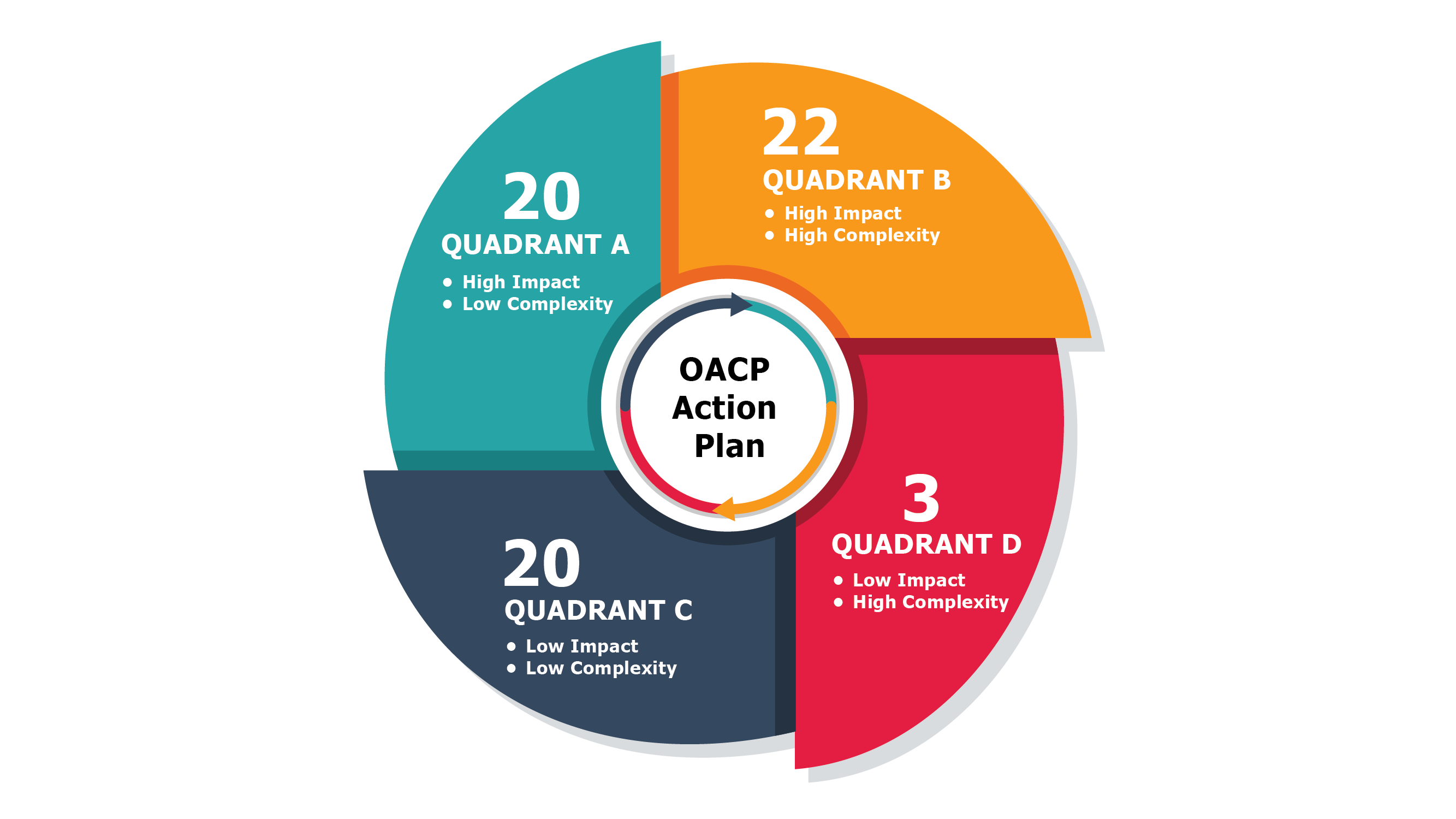
To ensure corruption-related concerns are addressed effectively, TNB established four monitoring and evaluation mechanisms:
-
Integrity Department Oversight
- Coordinates implementation, ensuring each division executes its action plans within the timeline.
-
ABMS Internal Audit
- Verifies compliance with Anti-Bribery Management System (ABMS) standards, ensuring every initiative meets required controls.
-
Standardised OACP Implementation Reports
- Divisions to prepare structured progress reports for review by the Board Integrity Committee (BIC).
-
TNB Risk Information System (TRIS)
- Ensures each division updates risk registers and related mitigation actions to prevent recurrence.
This structured approach ensures that allegations or concerns are not only attended to promptly, but also resolved systematically - supported by clear escalation paths, governance checkpoints, and board-level oversight.
Driving a Culture of Integrity Across the Organisation
TNB’s enhanced approach to anti-corruption management is more than a compliance exercise - it is a strategic commitment to responsible governance. With 65 targeted initiatives, strong monitoring structures, and clear accountability lines, TNB is taking steps to close corruption-related gaps and improve efficiency of its response to allegations.
Through these collective efforts, TNB aims to remain transparent, resilient, and driven by the highest standards of integrity. The success of this journey depends on the shared commitment of leadership and every employee to uphold the values that define the organisation.