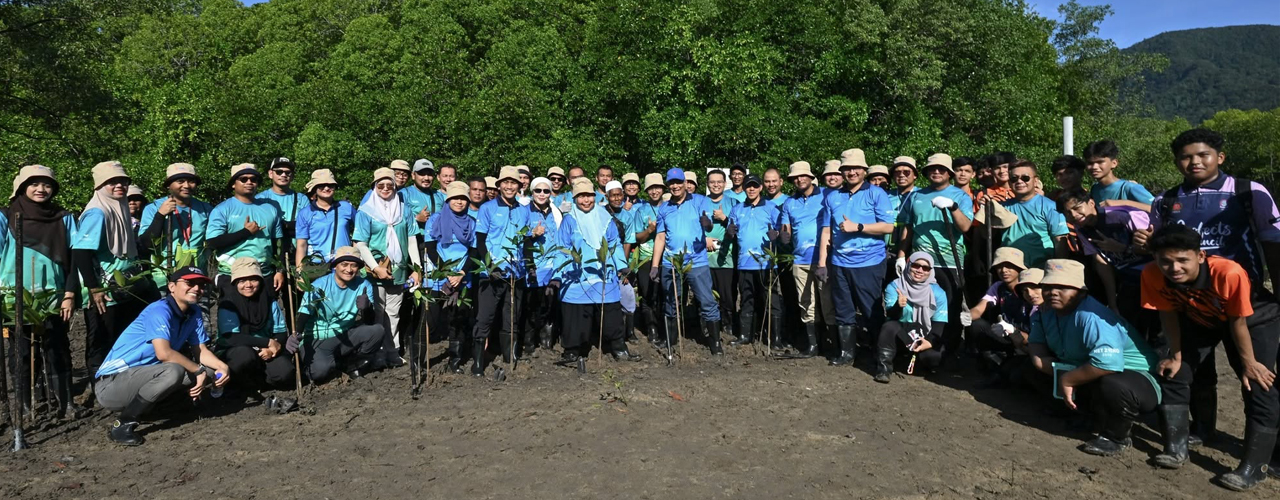
Tenaga Nasional Berhad (TNB) has planted 10,000 mangrove saplings in Kubang Badak, Langkawi, as part of its efforts to conserve biodiversity, strengthen coastal resilience and support surrounding communities. The restoration programme marks the first location under TNB’s My Brighter Green Initiative (MBGI) 2026, a nationwide environmental and community initiative targeting the planting of 40,000 forest and mangrove saplings across six locations in Malaysia.
Across Malaysia, every landscape carries a different environmental story. Some areas require forest restoration, while island and coastal communities depend on healthy mangroves, wetlands and shoreline ecosystems to support livelihoods, protect communities and sustain biodiversity.
MBGI 2026 brings TNB’s sustainability commitments closer to the ground by tailoring each restoration effort to the ecological and community needs of its location. Rather than treating tree planting as a standalone activity, the programme places emphasis on site suitability, long-term care, local participation and collaboration with conservation partners.
Implemented in strategic collaboration with the Malaysian Nature Society (MNS), MBGI 2026 also brings together government agencies, local authorities, educational institutions, community representatives, TNB employees and other stakeholders. Across the six locations, the initiative is expected to involve approximately 1,000 volunteers and stakeholders, supporting restoration efforts that are grounded in local needs.
For TNB, this approach reflects a simple but important principle: sustainability becomes more meaningful when it is connected to the place, the people and the purpose behind each initiative.
Why Kubang Badak's Mangroves Matter
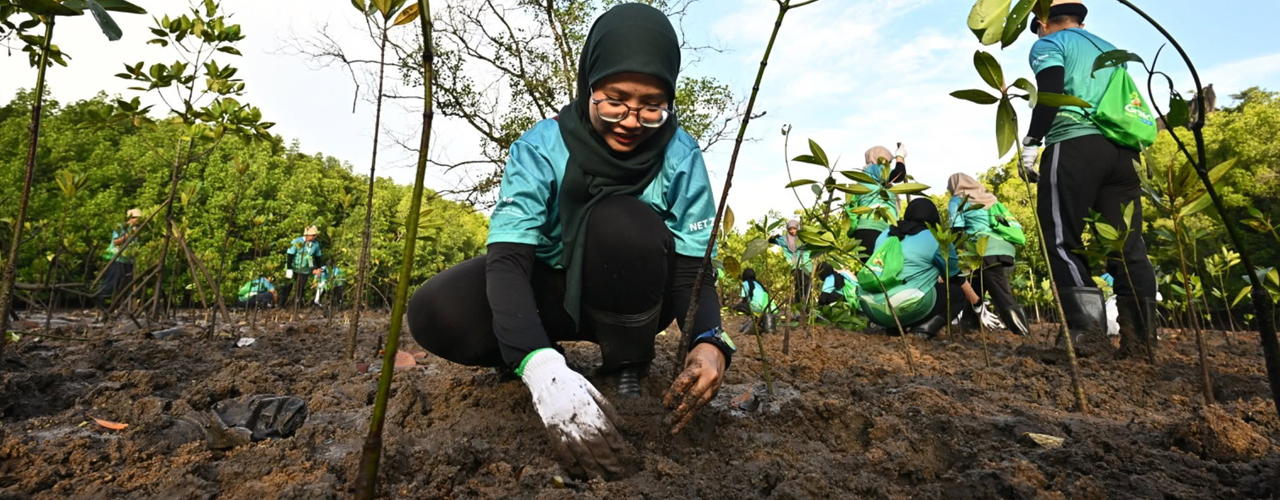
In Langkawi, the story begins at Kubang Badak, a coastal area where mangroves form part of the island’s natural defence system. Here, the roots of mangrove trees help stabilise the shoreline, reduce erosion risk and create habitats for marine life such as fish, crabs and other coastal species.
roots
stability
erosion risk
marine life
coastal
communities
The area was selected not only because of its ecological value, but also because of its connection to local communities. For communities living close to the coast, mangroves are more than trees. They are part of the wider landscape that supports fisheries, protects coastal areas and contributes to the character of island life.
The 10,000 saplings planted at Kubang Badak include Rhizophora apiculata, or Bakau Minyak; Rhizophora mucronata, or Bakau Kurap; and Avicennia species, commonly known as Api-api. Well adapted to Malaysia’s intertidal environments, these species perform essential ecological functions by stabilising the shoreline, creating nursery habitats for marine life and enhancing biodiversity.
The Langkawi initiative also reflects the importance of choosing the right species for the right location. In a coastal landscape, mangroves offer benefits that extend beyond greening. They help strengthen ecosystem resilience, support blue carbon storage and provide a natural buffer against climate related impacts such as rising sea levels and storm surges.
This makes Kubang Badak a fitting starting point for MBGI 2026, an island site where environmental restoration, climate resilience and community well-being meet.
Partnership at the heart of restoration
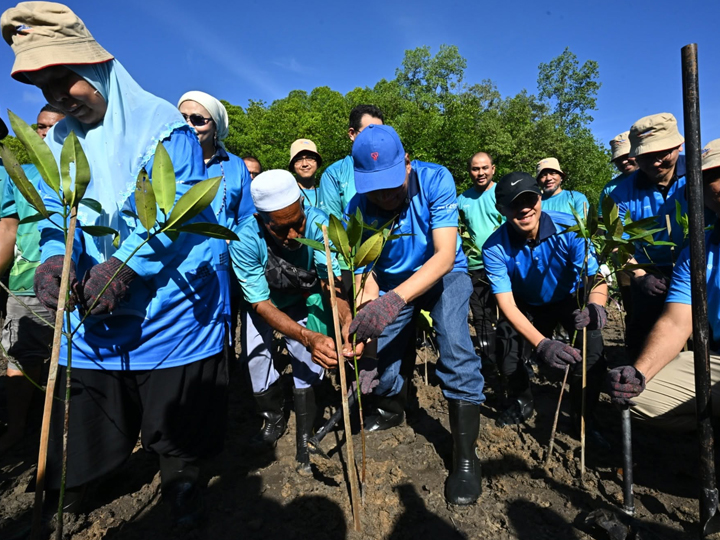
A key part of the Langkawi story is the collaboration behind it. TNB’s partnership with the Malaysian Nature Society (MNS) brings conservation experience into the initiative, supporting the planning and implementation of mangrove restoration at site level.
The initiative also received support and participation from the Kedah State Forestry Department, local authorities and agencies, including Langkawi-based stakeholders such as the Langkawi Municipal Council, Langkawi District Office and Langkawi Development Authority, alongside local communities, schools and community institutions.
This collective approach is important because ecosystem restoration requires more than planting. It requires local understanding, technical guidance and continued care. Through this collaboration, MBGI 2026 is designed to include monitoring and maintenance after planting to improve the survival rate of the trees and strengthen the long-term impact of the programme.
For TNB, this follow-through matters. The true value of a restoration programme is measured not only by what happens on the day the trees are planted, but also by how well the ecosystem is supported afterwards.
Connecting environmental action with community care
In Langkawi, the mangrove restoration effort was also complemented by targeted community support around Kubang Badak and nearby areas.
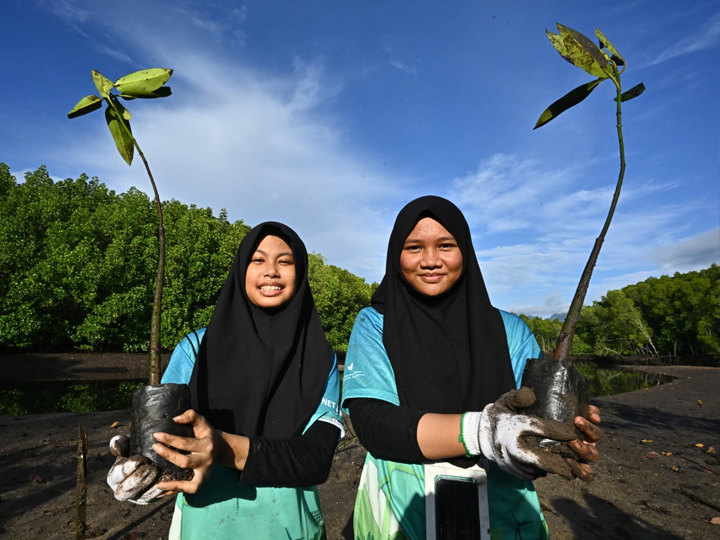
This included support for the construction of a water well at Jeti Nelayan Kubang Badak, a contribution to Masjid Kampung Ewa, the provision of smart learning equipment for Sekolah Kebangsaan Ewa and Sekolah Menengah Kebangsaan Ayer Hangat, as well as assistance under TNB’s Baiti Jannati Project for an asnaf family in Kampung Mawat.
This combination gives the Langkawi initiative a more grounded meaning. The programme does not only focus on restoring the coastal ecosystem, but also recognises the people who live, work and learn within the same landscape.
For fishermen, the coast is part of their daily livelihoods. For schools, it provides an opportunity to raise environmental awareness among young people. For local communities, the initiative shows how sustainability can deliver practical benefits while encouraging shared responsibility for the environment.
By linking mangrove restoration with community support, TNB is reinforcing the idea that environmental and social impact should move together.
A local story within a national journey
Langkawi is the first of six MBGI 2026 locations, with the initiative continuing in Perak, Melaka, Negeri Sembilan, Pulau Pinang and Selangor. Each location has been selected based on its own environmental and community context, allowing the programme to be localised rather than repeated in the same way everywhere.
Across the full MBGI 2026 programme, the 40,000 saplings are expected to contribute to an estimated annual carbon absorption of 576 to 680 tonnes of carbon dioxide equivalent. While this forms part of TNB’s broader climate-related efforts, the value of the initiative goes beyond carbon numbers. It also lies in biodiversity conservation, coastal protection, education, community participation and long-term environmental stewardship.
In Langkawi, that value is seen through mangrove roots holding the island’s edge, through community partners working together, and through a restoration effort that reflects the needs of the place.
As MBGI 2026 moves across Malaysia, each location will tell its own story. For Kubang Badak, the story is one of island resilience, where restoring mangroves helps protect the coast, support biodiversity and strengthen the bond between people and nature.