On 1 April 2025, Malaysia's power sector faced an unprecedented test when a fire at a major gas pipeline network near Putra Heights disrupted gas flows to several key power plants in the Central and Northern regions. The sudden shortfall underscored how fuel supply, infrastructure resilience, and system reliability are closely interconnected within the national electricity ecosystem.
For Tenaga Nasional Berhad (TNB), this moment required more than an operational response - it called for decisive coordination and crisis preparedness. Guided by its Business Continuity Management (BCM) Framework, TNB acted swiftly to protect national energy security while accelerating long-term measures to strengthen fuel diversity and resilience.
Crisis Moments: Navigating the Unexpected
Following the Putra Heights incident, several gas-fired power plants were temporarily non-operational while routine operational adjustments were carried out, before resuming their role in supporting a stable electricity supply. Certain coal plants that utilise gas for start-up operations were similarly temporarily non-operational until the necessary adjustments were completed.
TNB immediately activated its Corporate Crisis Command Structure to coordinate a system wide response with the Corporate Crisis Management Team (CMT) overseeing strategic coordination and stakeholder communication.
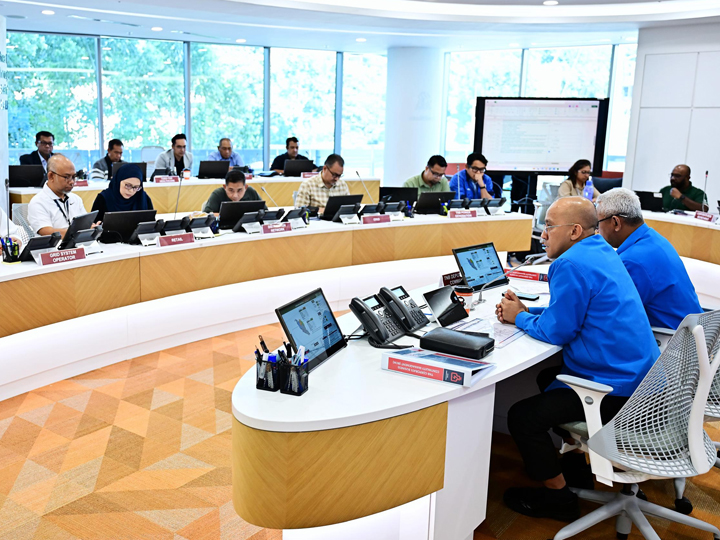
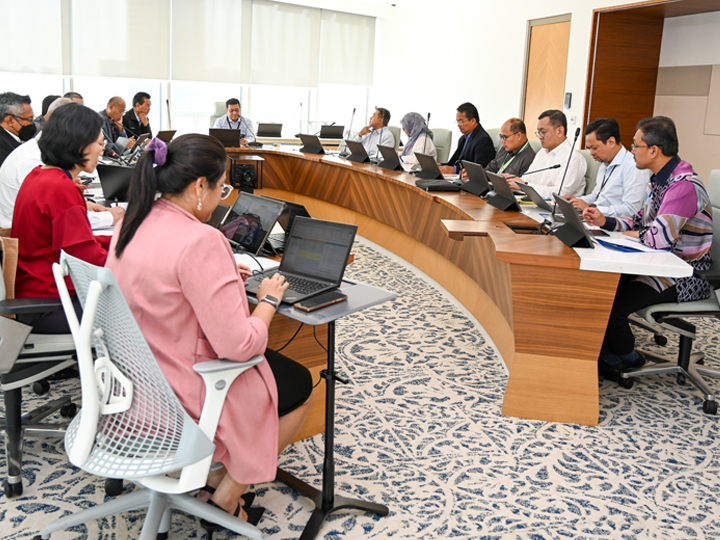
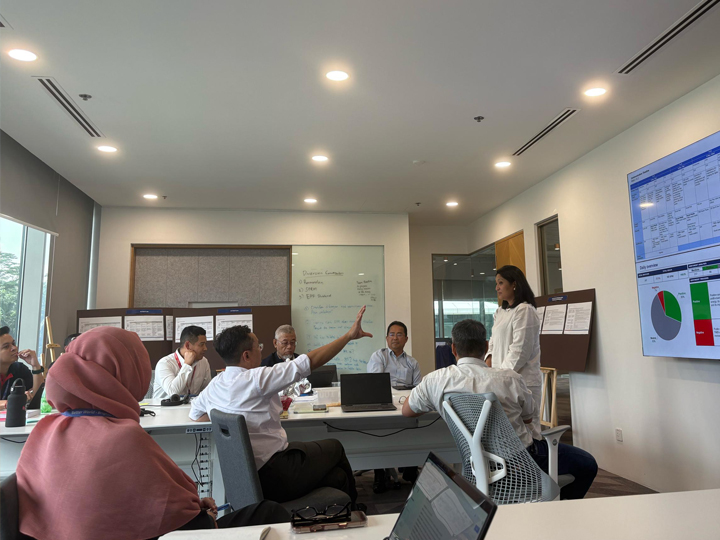
Our team of technical experts and customer care officers was deployed on-site to support agencies in accelerating crisis recovery efforts. This integrated approach minimised disruption and preserved public trust, ensuring stability during a critical period for national supply security.
Prioritising public safety, our technical experts assessed impacted systems and temporarily disconnected power supply in Putra Heights to prevent further risk. Power was restored only after authorities had confirmed that conditions were safe and necessary electrical safety checks had been conducted.
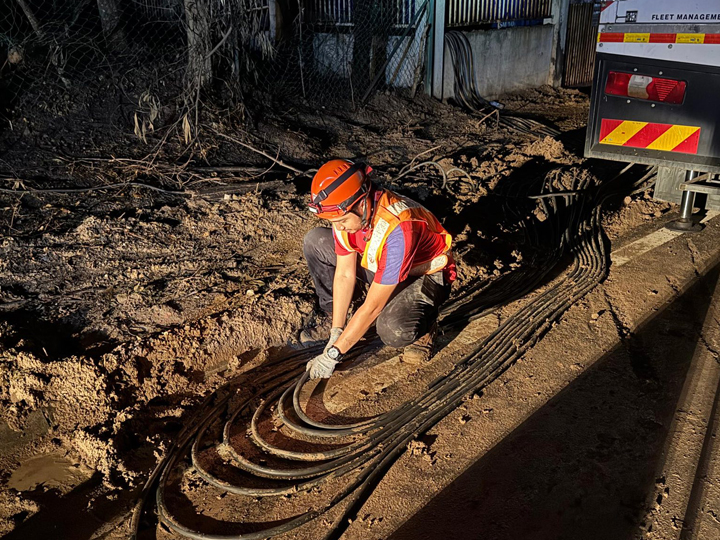
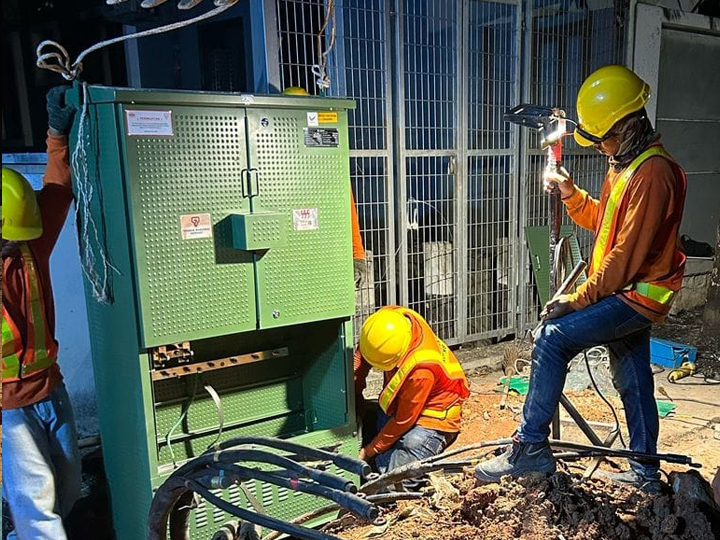
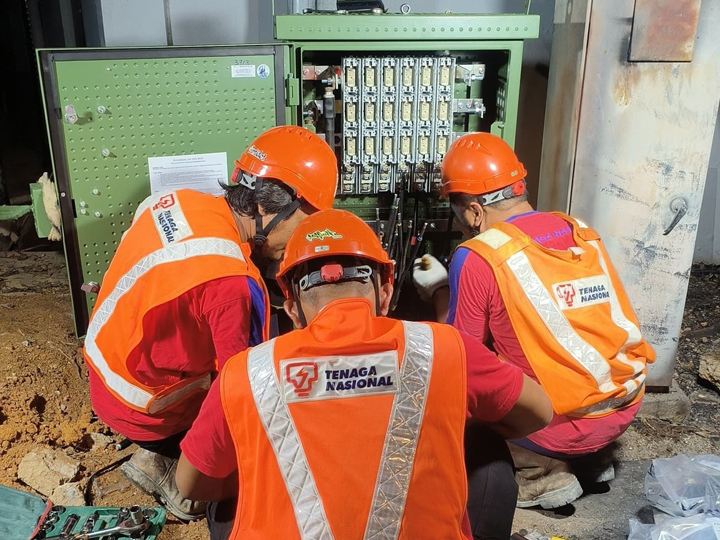
Once the area was declared safe, nearly 100 TNB personnel from technical, logistics, fleet, and customer care were mobilised to reroute damaged cables and carry out repairs, working continuously over 11 days to restore power to affected customers.
Stability Through Strategy
TNB introduced a range of contingency measures across its generation fleet to stabilise the grid system. Several gas plants switched to distillate or oil operations to sustain output, while hydro and coal plants were optimised to reinforce supply. Continuous monitoring of operating reserves, gas supply, and coal stock availability enabled the national grid to sustain reliable power delivery to homes and industries throughout the crisis.
During this period, additional system-level operational measures were introduced to further strengthen reliability. Planned outages for several power plants were deferred to preserve system readiness and ensure that non-critical testing activities did not reduce available capacity.
Power plants that were directly affected by the reduced gas supply operated on distillate during the monitoring period, while another gas-fired plant utilised Medium Fuel Oil. These fuel transitions were implemented as temporary and controlled measures to maintain system reliability, with emissions closely monitored and managed within requirements.
Electricity exports were temporarily halted so that available generation could be fully dedicated to domestic needs. Renewable energy and hydro resources were maximised where possible to substitute gas-based generation, supporting system stability while maintaining sustainable operations.
These measures were supported by daily optimisation studies, which modelled the most efficient generation mix and ensured that no load shedding occurred despite tight supply conditions. The incident also underscored the importance of strengthening regional interconnections to support secure electricity exchanges and enhance overall system resilience, with the potential to facilitate cross-border and multilateral electricity trading over the longer term.
On 6 April 2025, gas supply for the power sector reached an alert level following sustained demand and constrained pipeline flow. However, through coordinated response and strategic fuel management, supply levels recovered without significant impact on electricity generation.
Building Long-Term Resilience: Securing the Nation's Energy Future
Beyond managing the immediate challenge, TNB strengthened its focus on its long-term strategy to strengthen Malaysia's energy security through diversification and infrastructure expansion. Three key thrusts define this forward-looking approach:
-
 1. Enhancing Gas Infrastructure ResilienceCollaborative efforts were undertaken to reinforce the national gas pipeline network for TNB's gas-fired plants. Engineering reinforcements and precautionary inspections were carried out at critical sections to ensure long-term reliability.
 -
 2. Expanding Regasification CapacityRecognising the growing importance of imported liquefied natural gas (LNG), TNB is participating in the joint development of a regasification terminal in Lumut, Perak, complementing the existing terminals in Sungai Udang and Pengerang. The new facility will expand national LNG import capacity and serve as a strategic buffer against future supply disruptions.
 -
 3. Securing Gas Allocation for the Power SectorTo ensure steady supply in the medium term, the Gas Framework Agreement (GFA) was extended to secure a committed volume for the power sector through 2027. This provides operational certainty while long-term supply arrangements and market strategies move forward in tandem.
Powering Through Crisis, Strengthening for Tomorrow
The gas supply challenge of April 2025 highlighted the importance of strong coordination and preparedness across TNB's operations. The company's efficient recovery and effective communication to stakeholders ensured system stability and reliability.
The incident also revealed the resilience and unity of TNB's workforce, who worked around the clock in hazardous conditions, supported multi-agency efforts, and continual engagement with affected customers throughout the crisis.
Through robust BCM, diversified fuel strategies, and continuous infrastructure enhancement, TNB remains committed to safeguarding Malaysia's energy future and ensuring reliable power supply under all conditions.