Effective waste management is a key component of Tenaga Nasional Berhad’s (TNB) environmental stewardship. It reflects the scale, complexity and regulated nature of its electricity generation, transmission and distribution operations. TNB’s waste profile is closely linked to its energy mix and asset lifecycle, particularly coal-fired generation, maintenance activities, and plant decommissioning.
In this context, waste management is strategically aligned with TNB’s carbon management strategy and energy transition pathway, underscoring the importance of adopting a structured, data-driven approach to waste management across TNB’s operations.
FY2025 Waste Management Performance
In FY2025, TNB generated a total of 1,010,801 metric tonnes (MT) of waste across its operations, representing a 13% increase compared to the previous year. This increase reflects the scale of operational activities and inherent characteristics of TNB’s generation and asset maintenance portfolio. Of the total waste generated, hazardous waste accounted for 99.85%, while non-hazardous waste comprised 0.15%.
Coal ash alone contributes approximately 97% of the total waste generated, arising primarily from coal-fired generation assets. Other hazardous waste categories include used electrical equipment such as transformers and switchgear, transformer oil, and electronic waste (e-waste).
| Hazardous waste (99.85%) | Amount (MT) |
|---|---|
| Coal ash | 981,654.8 |
| Used equipment – Transformer/Switchgear | 7,109.3 |
| Transformer oil | 1,697 |
| E-waste | 8,574 |
| Others | 10,295 |
Given the scale and regulatory nature of hazardous waste generated, all such waste is identified, classified, handled, and temporarily stored in accordance with applicable environmental regulations. TNB engages only licensed and approved waste contractors for treatment and disposal purposes, supported by structured tracking, monitoring and audit mechanisms. These controls are in place to ensure full regulatory compliance and to minimise environmental risks throughout the waste lifecycle.
In contrast, non-hazardous waste represents a relatively small proportion of total waste generated.The majority of non-hazardous waste arises from mixed waste, accounting for 68%, which consists of non-segregated recyclable materials and residual waste. Other non-hazardous waste includes garden waste (19%), recyclable paper (5%), food waste (4%), recyclable tin, aluminium, and plastic (3%), bulky waste (1%) and recyclable glass (<1%). As at FY2025, data on construction solid waste and operational scrap are ongoing and will be reported once verified.
| Non-hazardous waste (0.15%) | Amount (MT) |
|---|---|
| Mixed Waste | 1023.7 |
| Garden Waste | 280.9 |
| Recyclable paper | 79.5 |
| Residual Waste | 63.7 |
| Recyclable tin, aluminium and plastic | 39.8 |
| Bulky Waste | 14.5 |
| Recyclable glass | 0.6 |
Category-Based Waste Management Strategy
TNB adopts a category-based approach to waste management, whereby waste is assessed and managed according to its type, characteristics, and most appropriate treatment method. Rather than applying a one-size-fits-all approach, each major waste stream is evaluated and managed based on the most suitable 4R principles - Reduce, Reuse, Recycle and Recover - with safe disposal applied only where recovery options are not feasible.
For high-volume waste streams such as coal ash, TNB prioritises waste reduction and recycling. Where feasible, coal ash is sent to licensed vendors to be recycled for beneficial use, including applications in cement production, while only a smaller portion is directed to ash ponds for safe and controlled disposal.
Other hazardous waste streams, including e-waste and used transformers or switchgear, are managed through a combination of reuse and recovery by licensed vendors. Transformer oil is similarly managed through reuse, recycling and recovery in accordance with regulatory requirements.
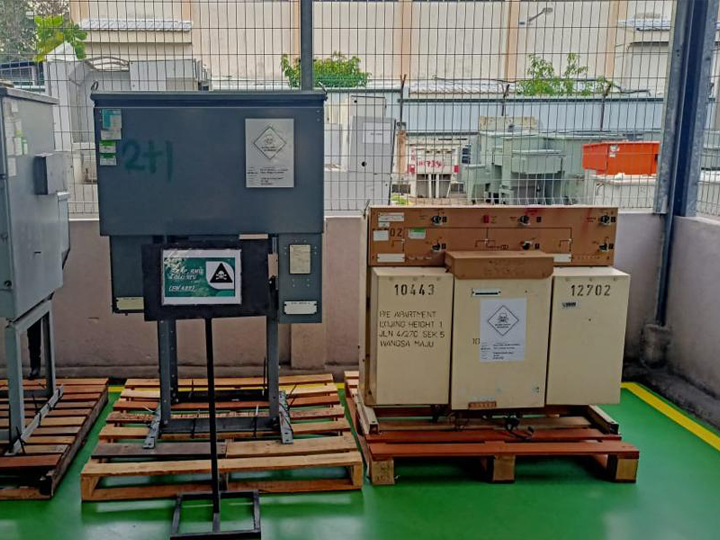
Used Equipment
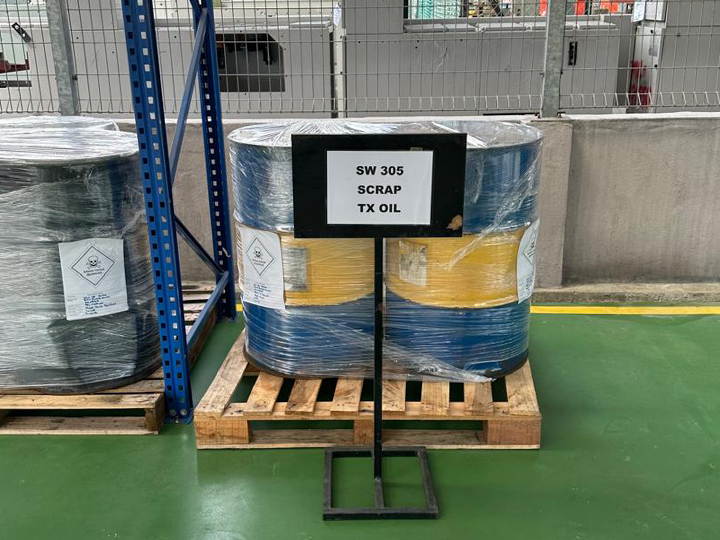
Transformer Oil
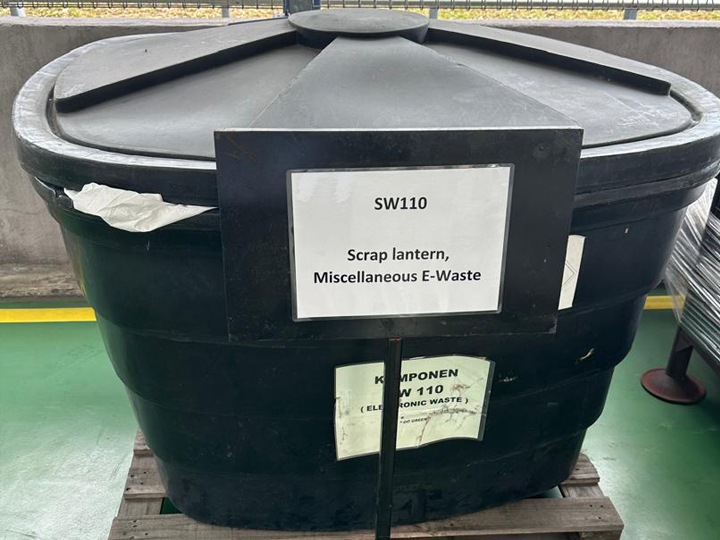
E-waste
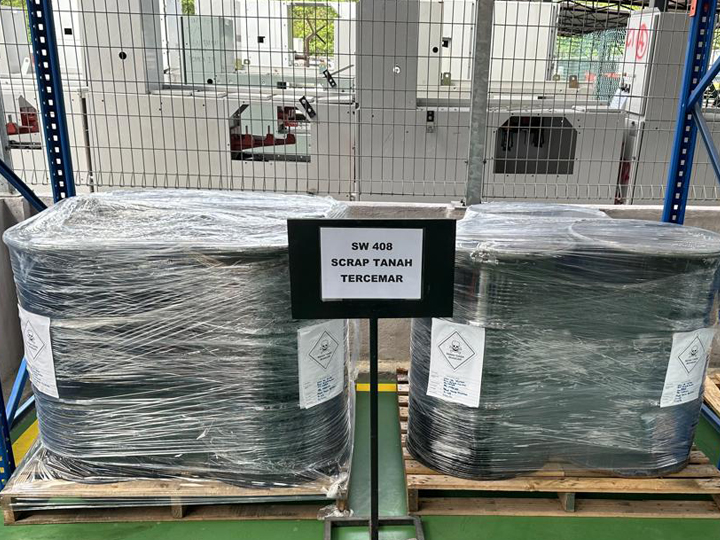
Others
For non-hazardous waste, TNB focuses on maximising recycling potential through improved waste segregation at source. Recyclable materials such as paper, metals, plastics, and glass are prioritised for reuse or recycling, with landfill disposal avoided wherever practicable. Where feasible, non-hazardous waste streams are also addressed through reduction measures to further minimise overall waste generation.
This category-based strategy allows TNB to focus on its most significant waste streams, prioritise waste reduction and recycling where the most meaningful outcomes can be achieved, and ensure that waste is managed safely, responsibly, and in compliance with regulatory requirements.
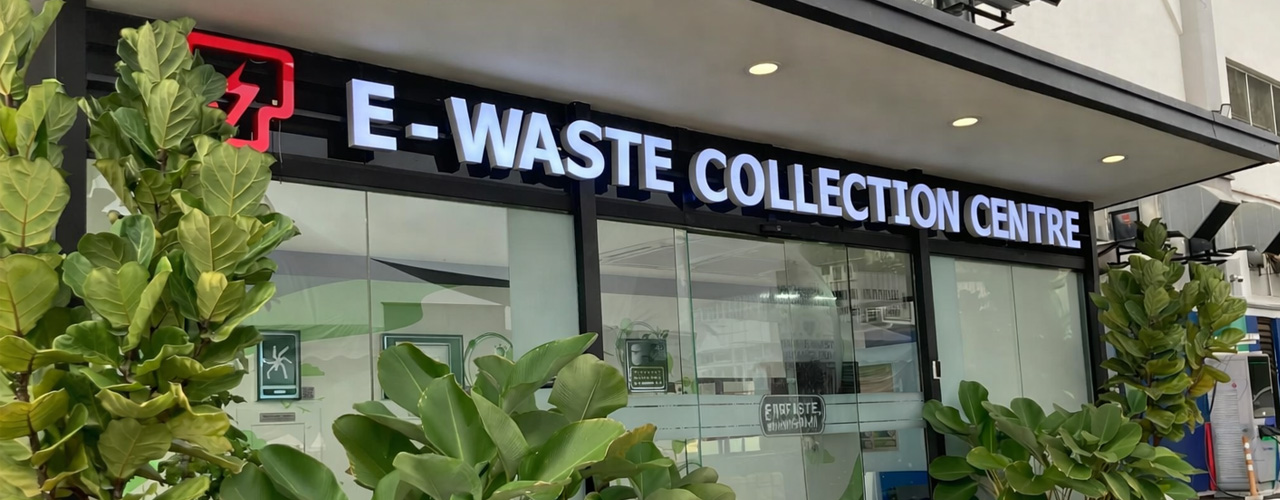
TNB E-Waste Collection Centre
Linking Waste Reduction to Energy Transition
Since coal ash constitutes a significant portion of total waste generation, TNB anchors its waste reduction and recycling targets to its carbon management strategy, coal ash generation projections, and Energy Transition (ET) Plan. Recycling efforts for coal ash already form a significant component of TNB’s waste diversion practices, providing a strong foundation for further improvements as coal capacity is progressively reduced.
These projections reflect the phased decommissioning of coal-fired power plants as part of TNB’s broader transition towards cleaner energy sources. As coal capacity declines over time, overall waste generation is expected to decrease correspondingly, driven primarily by lower coal ash volumes.
In this context, the transition away from coal serves as a key structural driver in reducing TNB’s waste footprint, reinforcing the alignment between waste management, decarbonisation efforts, and long-term energy transition goals.
Long-Term Waste Reduction and Recycling Commitments
To reinforce its commitment to responsible resource management, TNB has established clear, time-bound waste reduction and recycling targets, with FY2023 as the baseline year:
-
By2030
TNB aims to:
- Achieve a 20% reduction in total waste generated, and
- Attain a 50% annual recycling rate, supported by enhanced waste segregation, recycling initiatives, and diversion from disposal.
-
By2035
TNB commits to:
- Achieve a 50% reduction in total waste generated, and
- Increase the annual recycling rate to 60%, reflecting greater operational maturity and expanded recovery opportunities.
These targets complement TNB’s broader decarbonisation and energy transition roadmap, ensuring that waste reduction efforts are integrated into long-term operational planning rather than treated as standalone initiatives.
Continuous Improvement and Forward Outlook
While certain waste streams are inherent to their nature of operations, TNB remains committed to continuous improvement through waste minimisation at source, process optimisation and the exploration of recovery, reuse, and recycling opportunities where these are technically and economically feasible.
Looking ahead, TNB will continue to strengthen waste data granularity, enhance recycling performance and assess circular economy opportunities, particularly in relation to coal ash and other significant waste streams.
Overall, TNB’s approach to waste management demonstrates strong governance, regulatory compliance and forward-looking planning. Together, these efforts support TNB’s environmental, social, and governance objectives, while enabling the delivery of safe, reliable, and sustainable energy transition.