As the energy transition progresses, there is growing focus on how organisations assess and manage emissions across their operations and value chains. Commonly referred to as Scope 3 emissions, these provide a more comprehensive view of emission sources beyond operational boundaries and support longer-term transition planning.
In line with international best practices and the Greenhouse Gas (GHG) Protocol, Tenaga Nasional Berhad (TNB) monitors greenhouse gas emissions across three scopes: Scope 1 (direct emissions), Scope 2 (indirect emissions from purchased electricity), and Scope 3 (other indirect emissions across the value chain). Recognising the relevance of Scope 3 in providing a more complete emissions profile, TNB has taken a structured and phased approach to its Scope 3 journey, starting with categories that are most relevant, measurable and actionable within its operating context.
Understanding Scope 3 and Its Categories
Scope 3 emissions cover a wide range of indirect emissions that occur upstream and downstream of an organisation’s core operations. Under the GHG Protocol, these emissions are classified into 15 categories, spanning activities such as purchased goods and services, fuel and energy-related activities, transportation, waste, business travel, employee commuting and investments.
For the electric utilities sector, global benchmarking indicates that while several Scope 3 categories may be relevant, not all can be addressed simultaneously due to data availability, methodology challenges, and boundary considerations. Leading organisations typically prioritise categories where emissions can be reliably estimated, data ownership is clear, and system integration is feasible - allowing Scope 3 management to be built progressively in a phased manner.
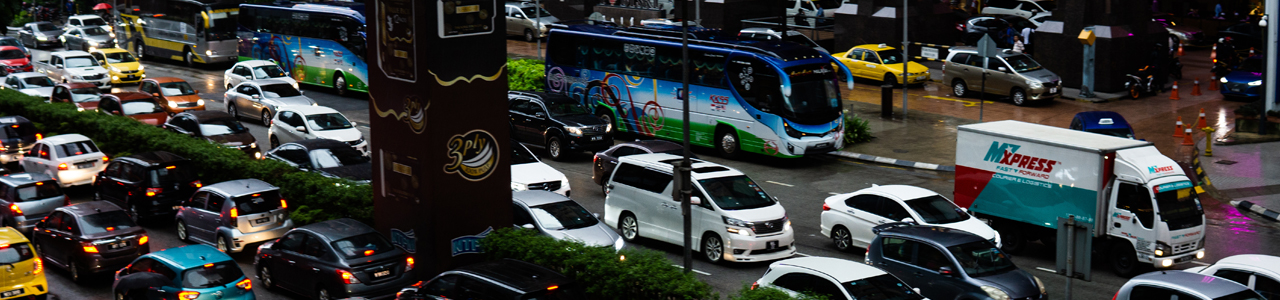
A Phased Approach to Scope 3 Implementation
As part of this phased approach, TNB has prioritised Scope 3 Category 6 (Business Travel) and Category 7 (Employee Commuting) for initial disclosure and management. These categories were selected based on several considerations:
-
- Clear organisational boundaries and internal data ownership
-
- Availability of established calculation methodologies
-
- Alignment with regulatory and reporting guidance
-
- Opportunities for digital integration and continuous improvement
This focus allows TNB to strengthen data accuracy, governance and assurance processes, while laying the groundwork for future expansion into other Scope 3 categories.
From Methodology to System Integration
An important part of Scope 3 management involves leveraging existing enterprise systems to support emissions data collection, alongside established data collection practices. This approach helps ensure that Scope 3 reporting can be carried out in a more structured and repeatable manner.
To support the calculation of Scope 3 emissions for business travel and employee commuting, distance travelled is used as the key input, with distances derived through established routing and mapping approaches. Over time, several enhancements have been introduced to strengthen data quality and consistency, including clearer specification of departure and arrival points, improved standardisation of transport modes, and additional validation checks to address incomplete or inconsistent entries. These refinements help improve the reliability of distance estimates and support more consistent emissions calculations, while allowing Scope 3 data collection to be progressively embedded into existing enterprise systems.
For business travel (Category 6), emissions are calculated based on distance travelled and mode of transport, using established emission factors. Data is captured through TNB’s internal claims system, covering travel by personal vehicles, flights and public transport.
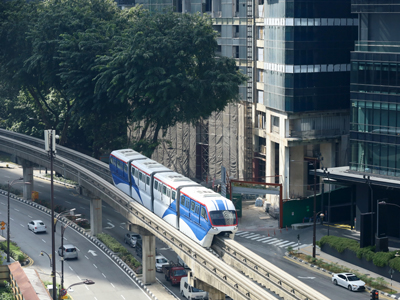
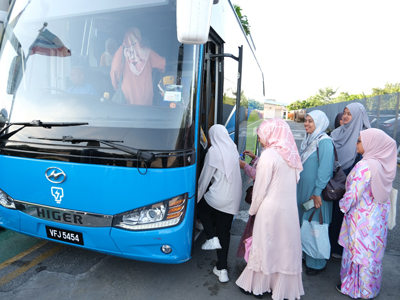
For employee commuting (Category 7), emissions estimation integrates employee profile information, commuting distance from home to workplace, mode of transport and work arrangements. As part of ongoing improvements, employees were requested to review and update key profile information within internal systems, supporting clearer location data and better differentiation between transport modes, fuel types and work-from-home patterns. Together, these enhancements support a more representative view of commuting-related emissions.
These system enhancements demonstrate how Scope 3 reporting is being embedded into everyday processes - transforming emissions management from a reporting exercise into a more consistent and scalable capability.
Disclosure on Scope 3 Emissions
TNB currently discloses Scope 3 emissions associated with business travel (Category 6) and employee commuting (Category 7). These emissions are reported in absolute terms to provide transparency on indirect emissions linked to employee-related activities.
Emissions from business travel were reported at approximately 0.0369 million tCO₂e (2023) and 0.0350 million tCO₂e (2024), increasing to 0.052 million tCO₂e in 2025. This increase reflects, in part, improvements in measurement methodology and data capture, alongside changes in travel activity levels.
For employee commuting, reported emissions remained at 0.0630 million tCO₂e across two reporting periods of 2023 and 2024, before increasing to 0.112 million tCO₂e in 2025. The change similarly corresponds with enhanced data coverage and refinements in commuting-related assumptions, which provide a more representative view of commuting patterns and work arrangements. On this basis, emissions associated with employee commuting in 2025 translate to approximately 3.7 tCO₂e per person, providing additional context to the aggregate figure.
Taken together, total disclosed Scope 3 emissions from these two categories amounted to approximately 0.100 million tCO₂e (2023), 0.098 million tCO₂e (2024), and 0.164 million tCO₂e (2025) across the respective reporting periods. At the category level, TNB has indicated an annual reduction of 1% for both business travel and employee commuting, supported by ongoing improvements in data quality, system integration and internal processes. These disclosures provide a structured baseline for understanding Scope 3 emissions beyond operational boundaries, while enabling progressive enhancement of Scope 3 management in future reporting cycles.
Building Capability Through Governance and Collaboration
Beyond systems, Scope 3 integration requires clear governance and cross-functional collaboration. Within TNB, multiple business entities (BEs) work together to align data, methodologies and reporting boundaries. This coordinated approach supports consistency across disclosures, strengthens internal controls and enables continuous learning as methodologies evolve.
The emphasis on governance and capability-building reflects a broader industry trend - Scope 3 is not addressed through a single initiative, but through the steady integration of sustainability considerations into strategy, operations and frameworks.
Looking Ahead
TNB’s current focus on Scope 3 Category 6 and 7 represents an important foundation in its broader carbon management journey. By prioritising categories that are most actionable today, strengthening system integration, and aligning with global standards, TNB is building the internal capability required to progressively expand Scope 3 coverage over time.
Beyond this initial focus, TNB is also enhancing its understanding of indirect emissions across upstream activities, from the extraction of gas and coal to the high energy-intensity manufacturing of essential equipment such as power transformers and turbines. This includes emissions associated with supplier logistics and the treatment of operational waste. Strengthening visibility in these areas supports greater transparency and coordination across related activities.
As expectations around transition planning and supply chain transparency continue to evolve, this structured approach enables TNB to deepen its understanding of indirect emissions while supporting the company’s long-term sustainability ambitions and Malaysia’s energy transition.