This article was first published on 4 December 2025, and updated on 6 January 2026.
Food waste is one of Malaysia’s largest waste streams, representing nearly half of total municipal solid waste. When sent to landfills, it decomposes anaerobically and releases methane - a greenhouse gas significantly more potent than carbon dioxide. For Tenaga Nasional Berhad (TNB), this challenge presents an opportunity to embed circular economy principles into daily operations while reducing environmental impact.
Through a coordinated effort across TNB, the organisation is putting in place a practical and scalable food waste-to-energy programme that diverts waste from landfills and converts it into renewable resources and value-added by-products. As of December 2025, 6,666.5 kg of food waste has already been diverted from landfills through this initiative.
From Cafeterias to Clean Energy
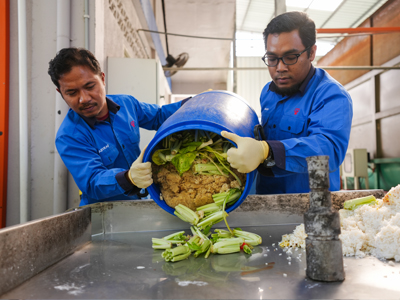
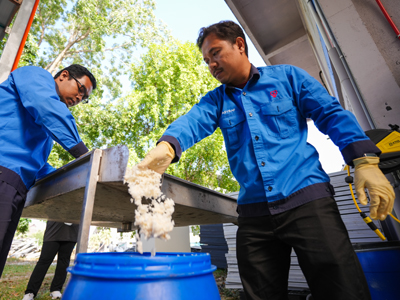
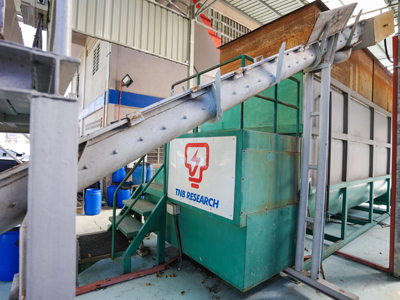
The journey begins when food waste from TNB kitchens is collected and transported to the TNB Research (TNBR) facility, where it undergoes proper segregation to remove plastics, bones, cutlery, cups, and other contaminants. This ensures that only clean organic material enters the treatment process. Once sorted, the food waste is channeled into advanced Waste-to-Energy (WtE) systems for conversion into renewable energy and value-added by-products.
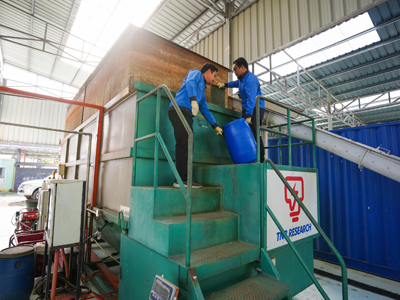
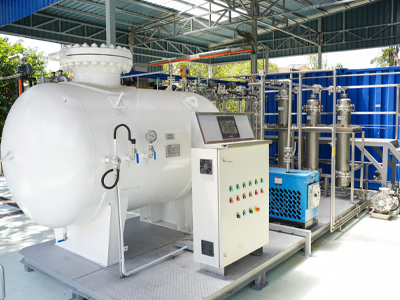
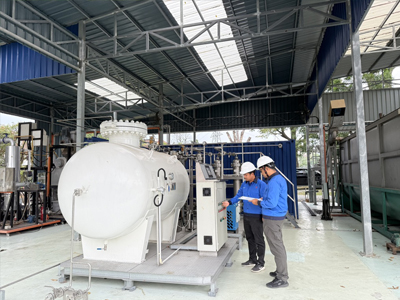
Central to the initiative is Pilot Dry Anaerobic Digester (AD) System, a low-water, low-carbon setup that relies on microorganisms to break down food waste in an oxygen-free environment to produce biogas and liquid biofertiliser.
Designed with a floating drum and biogas monitoring system, the digester converts up to 500 kg of food waste per day, generating renewable energy while minimising greenhouse gas emissions.
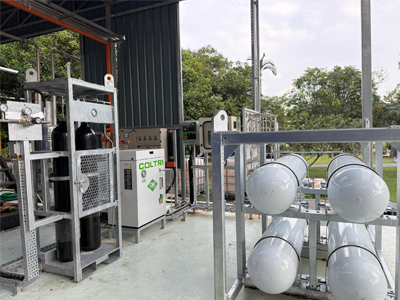
The biogas produced and collected are further refined through a Renewable Natural Gas (RNG) purification system, which upgrades it into high-purity methane suitable for microgrid applications or supplied back into TNB cafeterias as a cleaner and more sustainable cooking fuel.
The remaining digestate, which contains valuable nutrients, is converted into liquid biofertiliser for landscaping and agricultural use. This biofertiliser has received growing interest among community partners. NGOs such as KongsiKL and KEBUNITI, along with various small local farms, are now incorporating TNB’s biofertiliser into their urban farming and community agriculture programmes.

Transforming Waste into Renewable Resource
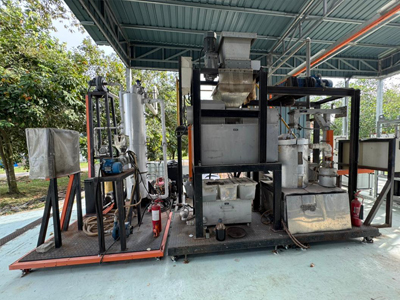
To further maximise resource recovery, TNB also utilises a food waste torrefaction system, which heats organic material in an oxygen-free environment to produce biochar. This cleaner, higher-energy fuel can be co-fired with coal or applied as a soil enhancer (carbon sink). The torrefaction system:
-
Improves energy efficiency by reducing power consumption by more than half, enabling cleaner and more cost-effective operation compared to conventional systems.
-
Processes up to 100 litres of food waste and other organic sources per cycle at the pilot plant, converting daily organic waste into useful outputs through a steady and reliable process.
-
Generates biochar (from food waste, biomass) and pyrolysis oil (from plastic waste) that can be utilised for various sustainable applications, supporting circular use of resources.
-
Completes the torrefaction process in a shorter timeframe than conventional systems, enabling a more efficient and reliable waste-to-resource conversion process.
Together, these features make the system a practical solution for reducing Malaysia’s waste, especially since food and plastic waste make up more than half of the country’s municipal solid waste. The system is also adaptable - it can be retrofitted with a simple condenser to convert plastic waste into pyrolysis oil with yields of up to 50%.
Building a Culture of Responsible Stewardship
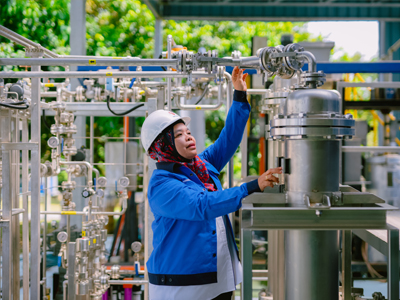
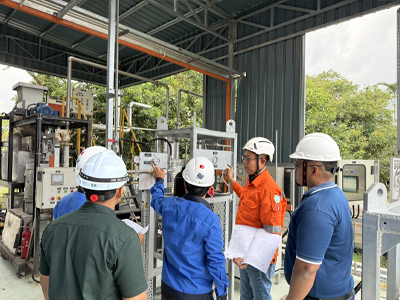
Across TNB premises, employees play a vital role in ensuring the success of the food waste initiative. Daily actions such as minimising plate waste, practising thoughtful portioning, and ensuring that food leftovers are placed in the correct collection bins help maintain a smooth and consistent food waste-to-energy process.
These simple behavioural habits reflect the spirit of ‘small steps, big impact’ where employees contributions create a strong foundation for expanding the initiative to more locations in the future.
Every Kilogram Counts
TNB’s food waste-to-energy initiative demonstrates that sustainability grows through continuous, collaborative effort. By converting everyday food waste into biogas, fertiliser, and renewable fuel, TNB is creating new value streams.
Through innovation, collaboration, and the commitment of our employees, every kilogram of food waste becomes an opportunity - not just to reduce what we discard, but to generate energy and knowledge.
Revision History:
6 January 2026: Updated data on food waste diverted from landfills.