As Malaysia accelerates its transition towards a lower-carbon future, Tenaga Nasional Berhad (TNB) continues to explore solutions that go beyond conventional emissions reduction. Among these is Project Chlorobloom, an initiative that reimagines carbon not as emissions to be managed, but as a resource capable of generating real environmental and economic value. What makes this project particularly compelling is where it begins: with microalgae harvested directly from the waters surrounding Sultan Azlan Shah Power Station (TNB Janamanjung), ensuring that the selected strains are naturally acclimatised to local conditions.
Rethinking Carbon
What if the very emissions from a power plant could become its most valuable output?
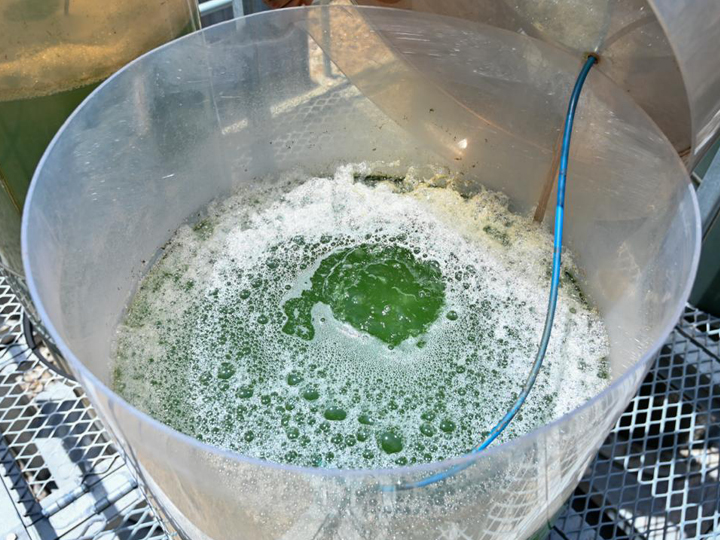
Project Chlorobloom is built on exactly this premise, transforming carbon dioxide (CO₂) from power plant flue gas into living biomass. Through Biological Carbon Capture and Utilisation (Bio-CCU), CO₂ is channelled directly into microalgae cultivation systems, where photosynthesis does the heavy lifting, converting what would otherwise be an emission into a growing, harvestable resource.
Rather than simply reducing emissions, this approach closes the loop, turning carbon into usable products and breathing life into the circular economy principle at a power plant scale.
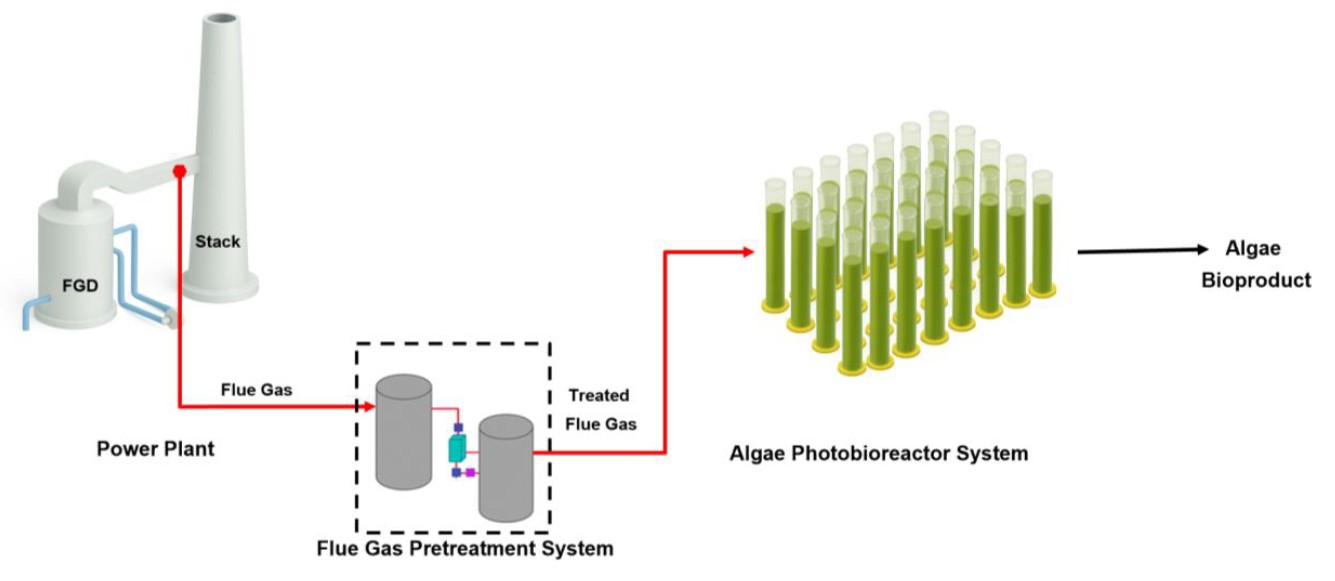
Figure 1: Conceptual Diagram of The Carbon Capture & Utilization (CCU) Solution – Project Chlorobloom
From Research to Real-World Application
The foundation of Project Chlorobloom rests on over a decade of dedicated research by TNB Research Sdn. Bhd. (TNBR), which has been exploring algae-based carbon capture since 2011, including a pilot plant at Sultan Azlan Shah Power Station that ran from 2015 to 2018 and laid the groundwork for everything that followed.
Earlier trials confirmed that microalgae are highly effective at capturing CO₂ due to their rapid growth and strong carbon fixation capabilities. Building on these findings, Chlorobloom marks the transition from research to real-world deployment.
Today, the project is being operationalised at Sultan Azlan Shah Power Station, contributing to TNB’s Net Zero 2050 ambition by supporting the reduction of overall CO₂ emissions intensity.
Growing Beyond the Lab
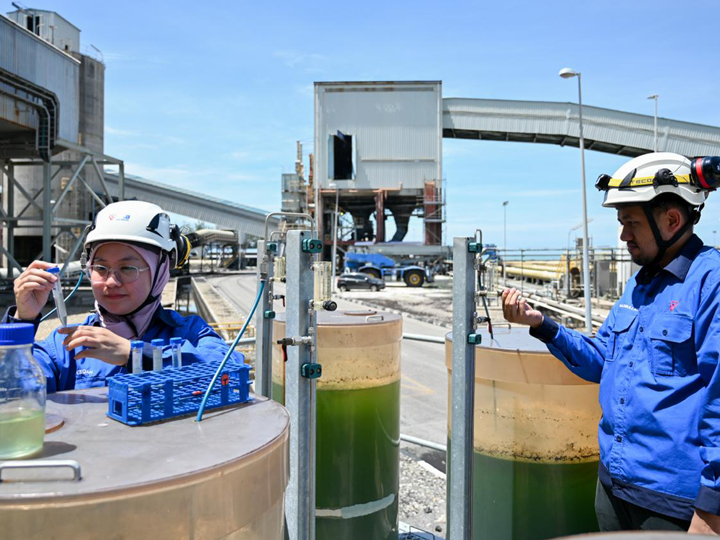
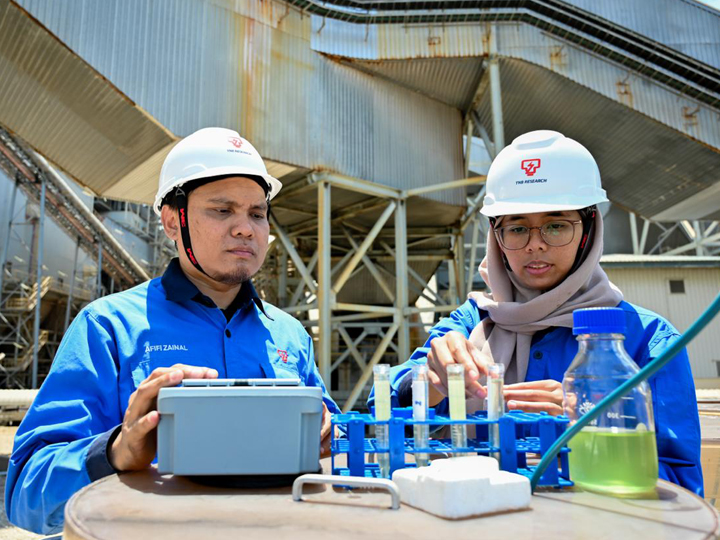
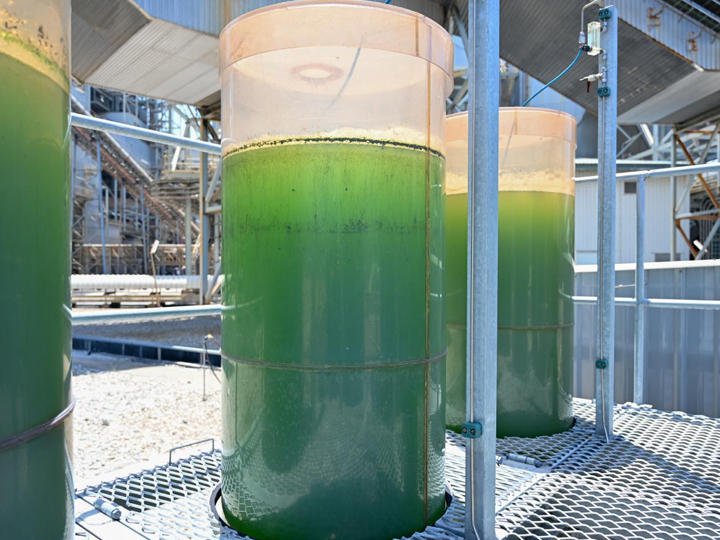
Project Chlorobloom has progressed through distinct stages of the photobioreactor (PBR) system, each expanding its scale and operational relevance:
| Stage | Capacity | Details |
|---|---|---|
| Bloom I |
(1,500 litres PBR system)
|
Initiated at TNBR’s research facility as a proof-of-concept to validate the Bio-CCU system. |
| Bloom II |
(3,000 litres PBR system)
|
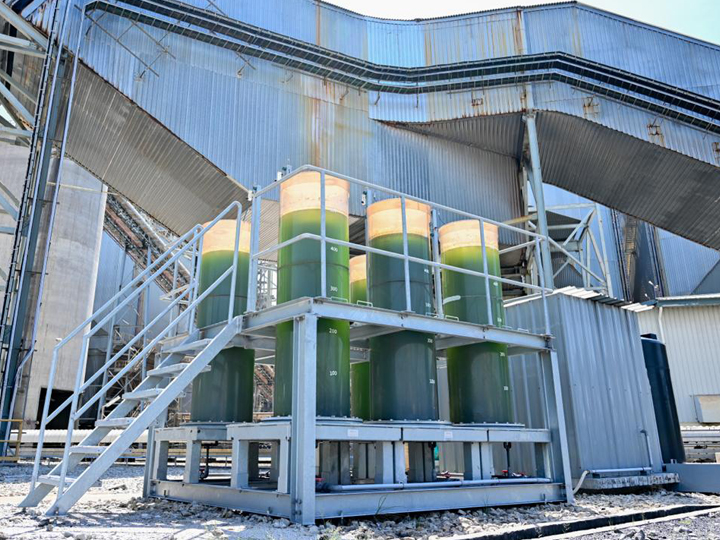
Successfully deployed and currently operational at Sultan Azlan Shah Power Station, demonstrating real-world application within a power plant environment. |
| Bloom III |
(24,000 litres PBR system)
|
An improved system to be installed at Sultan Azlan Shah Power Station, designed with improved cultivation technology and targeted for completion in 2026. Combined with Chlorobloom 2, the total system will be capable of mitigating approximately 5.94 tonnes of CO₂ annually. |
Harnessing Nature's Efficiency
Microalgae are nature’s quiet overachievers. They grow up to 20 times faster than conventional terrestrial plants and when it comes to carbon fixation, that speed translates directly into impact.
In Project Chlorobloom, flue gas containing approximately 8 to 15% CO₂ is channelled directly from the power plant stack into algae cultivation systems, where it feeds photosynthesis and drives rapid biomass growth. The algae used are native species from the surrounding power plant area, a deliberate choice ensuring the cultivated strains are already acclimatised to local conditions. Compared to conventional carbon capture methods, this biological approach produces no hazardous byproducts and generates a harvestable, high-value output in the process.
More importantly, the output is not waste but biomass with multiple potential uses.
Unlocking the Algae Value Chain
One of the defining features of Project Chlorobloom is its ability to convert captured carbon into products with real-world applications.
The algae biomass produced is far from a simple byproduct. Rich in proteins, lipids, pigments and bioactive compounds, it can be further processed and utilised across a range of high-value pathways, including:
Aquaculture feed for fish and prawns, supporting local food production.
Bio-fertilisers as sustainable alternatives amid rising input costs.
Nutraceuticals, pigments and personal care ingredients, targeting premium health and wellness markets.
Algae-derived lipids also hold strong potential as a feedstock for Sustainable Aviation Fuel (SAF), a particularly significant pathway given Malaysia’s ambitions in the aviation sector. This value chain transforms emissions into economically useful outputs across multiple industries, reinforcing the role of circular economy principles at the heart of TNB’s sustainability journey.
Creating Broader Impact
Beyond emissions reduction, Project Chlorobloom creates opportunities for wider environmental and community benefits.
A key focus is on creating value within and around the Manjung area itself. Downstream products such as aquaculture feed support the local fishing and farming communities, while bio-fertilisers offer a sustainable alternative to chemical inputs amid rising agricultural costs. Collaborations with industry players and government agencies further strengthen the ecosystem around these emerging bio-based industries.
In this way, Chlorobloom extends its impact beyond the power plant, linking decarbonisation efforts with real-world socio-economic value.
Scaling Across Peninsular Malaysia
Looking ahead, Project Chlorobloom is envisioned to move beyond a single-site implementation.
Future phases will focus on:
-
- Expanding Bio-CCU deployment across selected power plants in Peninsular Malaysia.
-
- Assessing the suitability of both coal- and gas-fired facilities for integration.
-
- Strengthening downstream value chains to support commercial viability.
This gradual scale-up approach allows TNB to refine both technical and commercial aspects before broader rollout. Longer term, TNB is also exploring the application of Algae Bio-CCU at gas-fired power plants through Project BloomX, pending the outcome of feasibility studies currently underway. If successful, this would extend the reach of Bio-CCU technology well beyond coal-fired assets, covering a much larger share of TNB’s generation fleet.
Through initiatives like Project Chlorobloom, TNB is not simply managing emissions, it is reframing what emissions can become: a starting point for growth, for a greener future.